KAILASH MANASAROVAR YATRA
US$4,500.00
/pp
-
14 Days
-
Mount Kailash
-
Spring/Autumn
-
Tour & Trek
-
5,630 Meters
-
Hard
-
Plane/Bus
-
04-50 People
-
JH#461
 Overviews
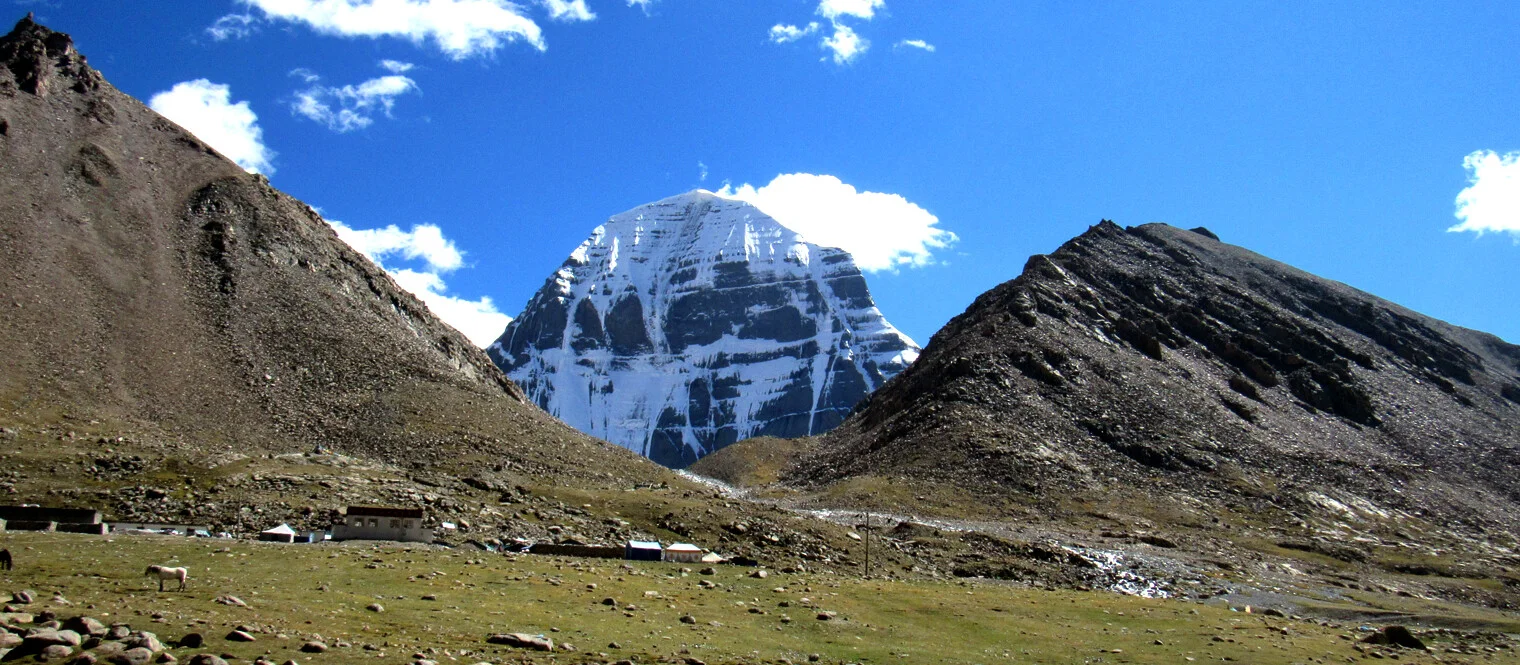
Mount Kailash and Lake Manasarovar are located in the Ngari Prefecture of the Tibet Autonomous Region (TAR), China, within the western Himalayan–Trans-Himalayan region. With average elevations above 4,500 meters, this remote high-altitude area is environmentally sensitive and strictly regulated. Mount Kailash (6,638 m) is among the world’s most sacred mountains, revered in Hinduism, Buddhism, Jainism, and Bon religion. Pilgrimage activities are limited to the sacred Kailash Parikrama (Kora), a 52-kilometer circumambulation completed over three days. Located near Mount Kailash at around 4,590 meters, Lake Manasarovar is one of the highest freshwater lakes in the world and a central highlight of the Kailash Mansarovar Yatra. Visitor movement around the lake is regulated to protect the fragile high-altitude ecosystem. The highest point of the parikrama is Dolma La Pass (5,630 m), where careful acclimatization and professional planning are essential due to altitude and changing weather conditions. Jagadamba Holidays Pvt. Ltd., Nepal operates the Kailash Mansarovar Overland Tour via the Kyirong Border, fully compliant with Tibet Travel Bureau (TTB) regulations. The itinerary includes licensed Tibetan guides, authorized ground operators, and staged altitude gain for safety. This program is designed for NRI and foreign passport holders and operates subject to Chinese government permits and border status. Accommodation ranges from standard hotels to basic guesthouses in remote trekking areas. The journey is delivered as a professionally managed Himalayan pilgrimage, combining Nepal-based expertise with authorized Tibetan partners to ensure a safe, compliant, and spiritually fulfilling Kailash Mansarovar Yatra.
Itinerary (Plan)
Upon arrival in Kathmandu (1,400 meters / 4,593 feet), pilgrims are warmly welcomed at Tribhuvan International Airport, marking the formal beginning of the Kailash Manasarovar Yatra. Kathmandu has long served as the spiritual and logistical gateway for pilgrims journeying toward Mount Kailash and Lake Manasarovar. After airport assistance, guests are transferred to their hotel for check-in and rest following international travel. The remainder of the day is intentionally kept light, allowing time for physical recovery, hydration, and mental preparation for the high-altitude pilgrimage ahead. Gentle walking and relaxation are encouraged, while tour staff remains available to assist with documentation checks and basic orientation. In the evening, pilgrims may explore nearby areas or engage in quiet reflection. This arrival day is intentionally designed to help the body adjust gradually while allowing pilgrims to settle in comfortably. By maintaining a relaxed pace and minimal activity, participants are able to conserve energy, stabilize after travel, and begin the Kailash Manasarovar Yatra with mental clarity, physical readiness, and a focused spiritual mindset.
The day begins in Kathmandu (1,400 meters / 4,593 feet) with guided visits to some of Nepal’s most sacred Hindu and Buddhist sites, forming an essential spiritual foundation for the Kailash Manasarovar Yatra. Pilgrims visit Pashupatinath Temple, one of the holiest Lord Shiva shrines, followed by Boudhanath Stupa, a UNESCO World Heritage Site and major center of Tibetan Buddhism. These visits offer blessings, reflection, and spiritual alignment before entering the Himalayan region. In the afternoon, a comprehensive Kailash Yatra briefing is conducted by the tour leader. This session covers route details, altitude awareness, health guidelines, safety procedures, and cultural protocols in Tibet. Documentation checks and equipment reviews are also completed. The day concludes with final preparations, ensuring pilgrims are spiritually, physically, and logistically ready to begin the sacred overland journey toward Mount Kailash.
The Kailash Manasarovar Yatra begins with an early morning departure from Kathmandu (1,400 meters / 4,593 feet) at approximately 07:00 AM, traveling north toward Timure (1,800 meters / 5,906 feet) near the Nepal–Tibet border. The overland journey covers around 125 kilometers and typically requires 7 to 8 hours, depending on road and weather conditions. The route follows the Trishuli River corridor, passing through mountain highways, terraced hillsides, and rural settlements before entering more remote Himalayan terrain. As the journey progresses, the road becomes increasingly winding, with some off-road sections near the border region, reflecting realistic Himalayan travel conditions. This gradual ascent from Kathmandu to Timure supports early altitude acclimatization, which is essential for the success of the Overland Kailash Tour. Upon arrival in Timure (1,800 meters / 5,906 feet), pilgrims check into a local hotel. Overnight stay near the border is planned intentionally to allow adequate rest and to ensure a timely and smooth start for immigration and customs formalities on the following day before entering Tibet.
The Kailash Manasarovar Yatra continues with a morning departure from Timure (1,800 meters / 5,906 feet) toward the Rasuwagadhi border (1,950 meters / 6,398 feet), located approximately 15 kilometers away and reached in about 45 minutes. Upon arrival at Rasuwagadhi, pilgrims complete mandatory immigration and customs formalities on the Nepalese side, followed by border clearance procedures on the Tibetan side. This process is conducted under official regulations and may require time depending on border operations. After completing formalities, pilgrims officially enter Tibet and meet the licensed Tibetan guide and driver, who will accompany the group throughout the Tibetan region of the Overland Kailash Tour. The journey then continues by vehicle for approximately 35 kilometers, taking around one hour, to reach Kyirong town (2,900 meters / 9,514 feet). Kyirong is selected for the first overnight stay in Tibet due to its moderate altitude and favorable conditions for acclimatization. Upon arrival, pilgrims check into the hotel and rest, allowing the body to adjust gradually before ascending further toward Saga and Mount Kailash.
After breakfast, the Kailash Manasarovar Yatra proceeds from Kyirong (2,900 meters / 9,514 feet) toward Saga (4,400 meters / 14,436 feet), entering deeper into the Tibetan Plateau. The journey covers approximately 170 kilometers and generally takes around 4-5 hours, depending on road and weather conditions. The route crosses the Kyirong High Pass and continues through vast open landscapes, gradually gaining altitude in a controlled manner essential for safe acclimatization during this Overland Kailash Tour. En route, pilgrims pass notable natural landmarks including Peiku Tso Lake and sections of the Brahmaputra River basin, both significant geographical features of Tibet. A hot packed lunch is provided during the drive to ensure comfort and energy maintenance at higher altitude. Upon arrival in Saga (4,400 meters / 14,436 feet), pilgrims check into the hotel and are served dinner. Saga functions as a key acclimatization hub before advancing toward Lake Manasarovar and Mount Kailash, and the evening is reserved for rest and observation of altitude response.
This day is reserved exclusively for acclimatization in Saga (4,400 meters / 14,436 feet), an essential component of the Kailash Manasarovar Yatra and a mandatory safety measure for high-altitude travel. Remaining at the same elevation allows the body to adapt gradually to reduced oxygen levels before proceeding toward higher regions near Lake Manasarovar and Mount Kailash. No long-distance driving is scheduled, minimizing physical strain and supporting physiological adjustment. Pilgrims are advised to take short, gentle walks around the Saga local market area, helping circulation while avoiding exertion. Adequate hydration, warm clothing, and rest are strongly recommended throughout the day. This controlled acclimatization period significantly reduces the risk of altitude-related symptoms during the later stages of the Overland Kailash Tour. All meals are provided at the hotel, and the overnight stay remains in Saga. This day focuses on health monitoring, recovery, and preparation, ensuring pilgrims are physically stable before ascending toward the sacred Manasarovar region.
After an early breakfast, the Kailash Manasarovar Yatra continues from Saga (4,400 meters / 14,436 feet) toward the sacred Lake Manasarovar (4,600 meters / 15,092 feet). This is a full-day overland journey of approximately 510 kilometers, requiring around 8-9 hours of driving across the western Tibetan Plateau. The route passes through remote high-altitude terrain and crosses the Mayum-La High Pass, an important geographic and spiritual gateway to the Manasarovar region, with steadily increasing elevation. A hot packed lunch is provided during the drive due to limited facilities along this remote stretch. The journey includes a circumambulation drive around Lake Manasarovar, allowing pilgrims their first extended darshan of one of the highest freshwater lakes in the world. By evening, the group reaches Chiu Gompa (approximately 4,600 meters / 15,092 feet), where accommodation is arranged in a simple guesthouse. Dinner is served, and rest is essential to allow proper acclimatization at this higher altitude before proceeding toward Mount Kailash.
The morning begins at Lake Manasarovar (4,600 meters / 15,092 feet), where pilgrims have the opportunity to perform a holy bath and puja, subject to weather and local conditions. This spiritual activity is an essential part of the Kailash Manasarovar Yatra, marking purification before approaching Mount Kailash. After completing rituals and having lunch near the lake, the journey continues by vehicle toward Darchen. The drive from Lake Manasarovar to Darchen (4,700 meters / 15,420 feet) covers approximately 40 kilometers and takes about one hour, following a relatively gentle route with minimal altitude gain. Upon arrival in Darchen, pilgrims check into the hotel and spend the remainder of the day resting. Light walking around the local area is recommended to support acclimatization at this elevation. Darchen serves as the official base town for the Mount Kailash Parikrama, and pilgrims may also purchase or arrange any final essentials required for the upcoming trek.
After a hearty breakfast at the hotel in Darchen, pilgrims depart Darchen (4,700 m / 15,420 ft) and proceed on a short scenic drive of approximately 8 km (about 30 minutes) to Yama Dwar, the official starting point of the Mount Kailash Parikrama. Yama Dwar is revered for its deep religious significance and offers pilgrims their first close darshan of Mount Kailash’s south face, marking the formal commencement of the sacred circumambulation. From Yama Dwar, the parikrama continues on foot along a gradually ascending trail through a broad valley toward Diraphuk (4,950 m / 16,240 ft). The sacred parikrama trek from Yama Dwar to Diraphuk covers approximately 12.8 km and typically takes 5–6 hours, depending on individual pace and weather conditions. The route involves an elevation gain of about 370 meters and a total altitude loss of approximately 20 meters. Pilgrims not undertaking the parikrama remain in Darchen. Upon arrival in Diraphuk, accommodation is arranged in a simple guesthouse, and the remainder of the day is reserved for rest, acclimatization, and preparation for the most demanding stage of the pilgrimage.
Today marks the most demanding and decisive day of the Kailash Manasarovar Yatra, as pilgrims cross Dolma La Pass (5,630 meters / 18,471 feet)—the highest elevation point of the entire Mount Kailash Parikrama and a profound spiritual milestone of the sacred journey. The day begins early at Diraphuk (4,950 m / 16,240 ft), where pilgrims may receive early-morning darshan of Mount Kailash under clear weather conditions. After an early breakfast, the parikrama continues with a steady ascent toward Dolma La Pass, passing through rugged high-altitude terrain and prayer-flag-lined paths that symbolize purification and renewal. After crossing Dolma La Pass, the trail descends carefully toward Gauri Kunda, a sacred glacial lake revered in both Hindu and Buddhist traditions. The trek then continues onward to Zuthulphuk (4,850 m / 15,912 ft). The sacred parikrama trek from Diraphuk via Dolma La Pass to Zuthulphuk covers approximately 18.1 km and typically takes 9–10 hours, depending on individual pace and weather conditions. The route involves an elevation gain of about 550 meters and a total altitude loss of approximately 840 meters. Upon arrival in Zuthulphuk, pilgrims check into a basic guesthouse. The remainder of the evening is reserved for rest, recovery, and quiet reflection after completing the most challenging and spiritually significant day of the Kailash Parikrama.
The morning at Zuthulphuk (4,850 meters / 15,912 feet) marks the closing stage of the Mount Kailash Parikrama. After breakfast, pilgrims set out on the final sacred walk toward Darchen, completing the circumambulation of Mount Kailash. This concluding section covers approximately 10.3 kilometers and usually requires 3 to 4 hours, depending on pace and weather. The route involves a gradual ascent of about 50 meters followed by an overall descent of roughly 160 meters, allowing a steady and composed walk as the Kailash Manasarovar Yatra reaches its formal completion. After reaching the road head, pilgrims are transferred by vehicle to Darchen (4,700 meters / 15,420 feet) for breakfast and regrouping with the full team. The return journey then continues across the Tibetan Plateau toward Saga (4,400 meters / 14,436 feet), covering approximately 490 kilometers and requiring 7 to 8 hours of driving. A hot packed lunch is provided en route. In case of a late departure from Darchen, overnight accommodation may be arranged at Dongba (4,400 meters / 14,436 feet), located about 325 kilometers away and requiring 5 to 6 hours of driving, before continuing onward.
The day begins with a sense of ease and renewal as the Kailash Manasarovar Yatra turns toward its return route. After breakfast, the journey departs from Saga (4,400 meters / 14,436 feet) and heads toward Kyirong Town (2,900 meters / 9,514 feet). The drive retraces the scenic route across the Tibetan Plateau, passing wide open valleys, river basins, and high-altitude landscapes encountered earlier. The steady descent supports natural physical recovery following the demanding days of the Mount Kailash Parikrama. The journey covers approximately 170 kilometers and typically takes around 4 hours, depending on road and weather conditions. As altitude gradually decreases, breathing becomes easier and overall comfort improves. Upon arrival in Kyirong, guests check in to the hotel and rest for the remainder of the day. Kyirong’s lower elevation and mild climate provide an ideal environment for relaxation before crossing back into Nepal. Overnight accommodation is arranged at a standard hotel in Kyirong.
The final day begins with a quiet sense of completion as the Kailash Manasarovar Yatra departs from Kyirong (2,900 meters / 9,514 feet) after breakfast and turns back toward Nepal. The drive proceeds to the Rasuwagadhi border, where exit formalities are completed on the Tibetan side, followed by immigration and customs procedures upon re-entering Nepal. Border processing is managed carefully to ensure a smooth and orderly transition between the two countries. After completing formalities, the journey continues by road toward Kathmandu (1,400 meters / 4,593 feet). The route descends gradually through mountain landscapes, river valleys, and rural settlements, marking a return to lower altitude and familiar surroundings. The total driving distance is approximately 155 kilometers, with an estimated travel time of around 8-9 hours, depending on road and traffic conditions. Upon arrival in Kathmandu, pilgrims check in to their hotels. In the evening, the tour manager conducts the Kailash Certificate Distribution and feedback session, formally concluding the Mount Kailash and Lake Manasarovar Pilgrimage.
The final day marks a gentle conclusion to the Kailash Manasarovar Pilgrimage as pilgrims prepare for departure from Kathmandu (1,400 meters / 4,593 feet). After breakfast, guests check out from the hotel and transfer to Tribhuvan International Airport according to their flight schedules. With formal travel arrangements completed, the focus shifts to reflection on the spiritual journey undertaken to Mount Kailash and Lake Manasarovar. This departure day is kept unhurried, allowing time to organize luggage, complete onward connections, or continue personal travel plans. Optional extensions within Nepal, including cultural sightseeing, spiritual retreats, or short Himalayan excursions, may be arranged upon request. As pilgrims depart, they carry with them the experiences, insights, and blessings gained during the yatra. The journey concludes not only as a physical return home, but as a lasting spiritual milestone, marking the successful completion of the Kailash Manasarovar Yatra, and memories that continue to inspire future paths ahead.
Group Size & Pricing
| Group Size (Pax) |
4 - 5 |
6 - 10 |
11 - 15 |
16 - 20 |
21 - 25 |
26 - 30 |
31 - 35 |
36 - 40 |
41 - 50 |
| Cost Per Person |
$4,275 |
$4,195 |
$4,115 |
$4,035 |
$3,955 |
$3,875 |
$3,795 |
$3,715 |
$3,635 |
Cost Include
- All transfers within Nepal are included as per itinerary
- Any domestic flight of Nepal as per trekking itinerary
- Trekking accommodation (hotel, lodge and/or tent) as per itinerary
- Small shared room with shared bathroom during trek in Nepal
- In Kathmandu and/or Pokhara: Stay at ***Hotel with breakfast
- Luggage for porters during the trek (12.5 kg/person)
- 3 meals (Breakfast, Lunch and Dinner) during the trek
- Unlimited tea or coffee for breakfast during the trek
- An English speaking guide (trekking/tour) as per Itinerary
- Travel insurance for trekking staff (guides and porters)
- All expenses of trekking staff(s) during trekking
- Conservation/National park entry fees
- Any special tour/trekking/climbing permits
- Sightseeing / Wildlife tours if included in the itinerary
- Farewell dinner in Kathmandu before returning home
Cost Exclude
- Single room/single tent surcharge (on request)
- Round trip/one way international flight ticket to Nepal.
- Tourist visa for Nepal (30-50 $, depending on length of stay)
- Personal Insurance (covers: Trip/flight cancellation, helicopter rescue)
- Meals (lunch, dinner) at hotels in Kathmandu, Pokhara and other cities
- Gratuity for trekking staff (recommended: 9€ /10$ per traveler per day)
- Drinks (soft, hot or mineral/boiled water) during the lodge trek
- Any personal trekking and/climbing equipment for trekking in Nepal
- Hotel expenses in case of early return from trekking for any reason
- Costs due to flight cancellations & extra porters/horses during the trek
- Any additional service and KTM – Lukla helicopter shuttle flight cost
- Additional costs incurred due to any reason beyond Jagdamba’s control
- More evidence about pandemics like COVID-19 if needed in the future.
- Personal expenses during the trek (phone, wifi, shower, charging etc.)
- Other costs and things that are not mentioned in the service inclusion
|




 Trip Overview
 Travel Itinerary
 Cost Includes
 Cost Excludes
 Fixed Departure
 Route Map

 Freqeuntly Asked Questions
 Reviews And Rating