YARTUNG FESTIVAL MUSTANG TREK
US$0.00
/pp
-
18 Days
-
Upper Mustang
-
Spring/Autumn
-
Trekking
-
4,125 Meters
-
Moderate
-
Car / Plane
-
02-16 People
-
JH#257
 Overviews
Discover the Yartung Festival Mustang Trek, a unique journey that blends adventure and cultural immersion in Nepal’s mystical Mustang region. This trek offers a rare opportunity to experience the vibrant Yartung Festival, celebrated with grandeur in Ranipauwa near the revered Muktinath temple. Held over four days around the Janaipurnima festival, Yartung brings together locals from 19 nearby villages. The region transforms into a lively hub of traditional festivities, rich cultural performances, and time-honored rituals. As you traverse the rugged trails of the Upper Mustang Trek, you will marvel at Mustang’s stark, arid beauty and the thriving deep-rooted traditions. The Yartung Festival unites communities and showcases the Mustangi people’s cultural richness through vibrant displays. Enjoy horse riding, music, dance, and traditional costumes. Highlights include exhilarating horse riding competitions. Skilled riders race at full speed to catch Khada and coins, demonstrating exceptional horsemanship. Additionally, the arrow-throwing contest symbolizes brotherhood and unity among the communities. Moreover, the trek offers a chance to explore Mustang’s lesser-known cultural treasures, such as the sacred Damodar Kunda Mustang Trek. The festival’s resurgence, led by the Waragung Mukti Chhetra Rural Municipality, ensures that these ancient traditions continue. By participating in the Yartung Festival Mustang Trek, you will enjoy breathtaking Himalayan views and immerse yourself in the rich heritage of the Mustangi people. This cultural journey provides an extraordinary way to experience Mustang’s living traditions while relishing the thrill of trekking in one of Nepal’s most remote and fascinating regions. 🏇 Yartung Festival 2026 – Upper Mustang Special DepartureJoin us for the spectacular Yartung Festival 2026 in Upper Mustang, one of the most vibrant and culturally significant celebrations in Nepal's Forbidden Kingdom. We have been organizing this special festival trek for many years with experienced local guides and seamless logistics. The Yartung Festival 2026 will be celebrated on 17th, 18th, and 19th August 2026 (English calendar) in the ancient walled city of Lo Manthang. This rare event features traditional horse racing, colorful Tibetan attire, spiritual ceremonies, music, and centuries-old Mustang traditions. Secure your place early for this unique cultural trekking experience in the restricted area of Upper Mustang.
Itinerary (Plan)
Arrive in Kathmandu, Nepal's vibrant capital, where you'll be warmly welcomed with marigold garlands. After transferring to your hotel, take time to relax and acclimate to the bustling city. Discover vibrant local markets, indulge in traditional Nepali dishes, and delve into Kathmandu's rich cultural tapestry. This initial day is perfect for easing into your journey, setting the stage for the exciting adventures ahead in Eastern Nepal. A representative from Jagadamba Holidays will ensure a smooth and pleasant arrival.
Discover Kathmandu’s rich cultural heritage with a guided tour of its most iconic landmarks. Enjoy a comprehensive exploration of three must-see sites that highlight Nepal’s diverse religious traditions and architectural splendor.
Bhaktapur Durbar Square:
Begin your day at Bhaktapur Durbar Square, a UNESCO World Heritage Site renowned for its medieval architecture. This historic square is home to intricately carved temples, palaces, and courtyards that reflect the grandeur of the Malla period. Stroll through the square and marvel at the traditional Newari architecture and craftsmanship.
Boudhanath Stupa:
Next, visit Boudhanath Stupa, one of Nepal’s largest and most significant Buddhist stupas. This grand mandala, encircled by monasteries and prayer wheels, serves as a central hub for Tibetan Buddhism in Nepal.. The serene atmosphere and vibrant Tibetan culture offer a unique and peaceful experience.
Pashupatinath Temple:
Conclude your tour with a visit to Pashupatinath Temple, a revered Hindu sanctuary dedicated to Lord Shiva. Located along the Bagmati River, this temple complex features impressive pagoda-style architecture and serves as a major center for Hindu rituals. Witness the spiritual ambiance and observe traditional ceremonies at this revered site.
Enjoy a guided exploration of these significant landmarks, immersing yourself in the cultural and historical richness of Kathmandu.
Your journey begins with a scenic drive to Pokhara, a picturesque city nestled beside the serene Phewa Lake. The drive typically takes around 6-7 hours, covering approximately 200 kilometers from Kathmandu. For a more time-efficient and scenic travel experience, consider opting for a short 30-minute flight from Kathmandu to Pokhara instead of the 6-7 hour drive. This premium option, available at an additional cost, offers a breathtaking aerial view of the Himalayan landscape, ensuring a more comfortable and memorable journey.
As you leave the bustling capital, the road winds through lush green hills, terraced farmlands, and charming villages, offering a glimpse of rural Nepalese life. Enjoy the tranquil atmosphere of Pokhara, with the majestic Annapurna range standing tall in the backdrop. This city is the gateway to your trekking adventure, so take time to relax and prepare for the thrilling days ahead.
After breakfast, catch a morning flight from Pokhara to Jomsom, the gateway to the Upper Mustang region. The flight offers spectacular views of the Annapurna and Dhaulagiri ranges, providing an awe-inspiring start to your journey. Upon arrival in Jomsom, begin your trek to Kagbeni, a historic village located at the junction of the Kali Gandaki and Mustang rivers. The trek covers 10.40 kilometers and takes 3 to 4 hours, with an elevation gain of 240 meters and a descent of 130 meters.
As you traverse the arid landscapes, enjoy stunning views of the Kali Gandaki Valley, flanked by rugged terrains and majestic Himalayan peaks. Along the way, you'll encounter ancient monasteries and traditional Tibetan architecture, offering glimpses into the region's rich cultural heritage.Kagbeni, known as the gateway to Upper Mustang, offers an authentic glimpse into the region’s rich Tibetan heritage and ancient traditions.
Upon arriving at Kagbeni, spend the evening at leisure or explore the charming village with a guide to delve deeper into its cultural and historical significance.
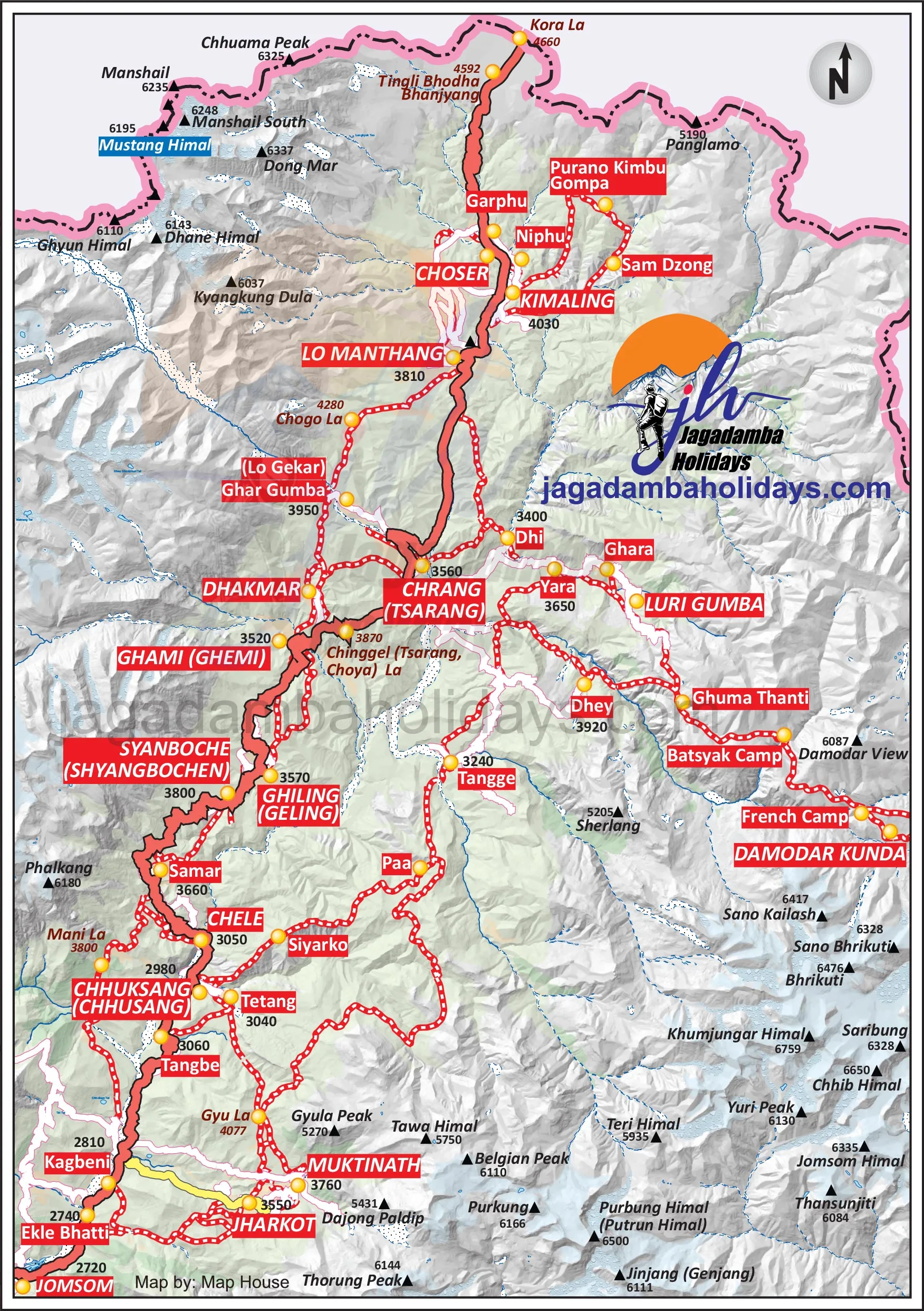
After breakfast, embark on your trek from Kagbeni through Chhusang (2,980 m) to Chele (3,050 m). The trek covers approximately 14 kilometers and typically takes 6 to 7 hours. During this journey, you will ascend 650 meters and descend 400 meters.
The trail gently ascends, passing through diverse landscapes, including apple orchards, juniper forests, and traditional Tibetan villages. Along the way, enjoy stunning views of Nilgiri Peak (7,061 m), Tilicho Peak (7,134 m), and the vast Kali Gandaki Valley.
As you gain altitude, the distinct Tibetan cultural influence becomes more apparent in the architecture and lifestyle of the local settlements. The rugged terrain and ancient trails offer a rich blend of natural beauty and cultural heritage, making this section of the trek particularly rewarding.
Upon reaching Chele, explore the village with its traditional stone houses and immerse yourself in the tranquility of Mustang’s timeless beauty. Stay overnight at a local teahouse, resting and preparing for the next day’s adventure.
After breakfast, begin your trek from Chele (3,050 m) via Chungsi Cave to Syangboche (3,800 m). The trek covers approximately 13 kilometers and typically takes 7 to 8 hours. During this journey, you will ascend 1,250 meters and descend 550 meters.
Today’s trek involves a challenging ascent to reach Syangboche, offering breathtaking views of the Annapurna and Dhaulagiri ranges, which dominate the horizon throughout your journey. The trail winds through a stark, arid landscape, characterized by rugged cliffs, deep gorges, and vibrant high-altitude deserts. As you climb higher, the dramatic transformation of the terrain provides a stark contrast to the lush landscapes you encountered earlier, giving you a true sense of the remote and majestic beauty of Mustang.
The Chungsi Cave, located near the trail, is a significant religious site and holds deep spiritual significance for the local people. It is believed to be a place of meditation and reflection, surrounded by ancient monasteries and sacred shrines. The cave itself features striking rock formations and painted murals, offering a glimpse into the rich cultural and spiritual heritage of the region.
As you ascend towards Syangboche, you’ll pass through narrow canyons and rocky trails, where the stark beauty of the high Himalayas unfolds before you. The sense of isolation and serenity is palpable as you journey through this remote and untouched part of Mustang. Upon reaching Syangboche, take some time to soak in the tranquil atmosphere of this traditional village. You’ll find charming stone houses, and the panoramic views of the surrounding peaks make Syangboche a perfect place to rest and reflect on your journey.
After breakfast, begin your trek from Syangboche (3,800 m) over the Nyi La Pass (3,932 m) to Ghami (3,520 m). The trek covers approximately 11 kilometers and typically takes 7 to 8 hours due to the combination of challenging high-altitude terrain, significant ascents, and descents.
The trek involves a steady ascent to the Nyi La Pass at 3,932 meters, where you’ll encounter thin air and rocky, rugged paths. The descent from the pass is equally demanding, as you navigate steep, rocky terrain while descending 650 meters. These factors contribute to the extended duration of the trek.
Trekking through this segment offers dramatic landscapes, with breathtaking views of arid valleys, towering peaks, and the vast Upper Mustang region. The Nyi La Pass, located at an elevation of 3,932 meters, provides stunning panoramic views of the surrounding mountains, including Nilgiri and Annapurna ranges.
The trail descends through rocky terrain, crossing through traditional villages like Ghami, known for their unique architecture, narrow alleys, and colorful fields. Ghami, one of the region’s largest villages, provides an authentic insight into the traditional lifestyle and rich culture of the Mustang people. The blend of rugged landscapes and charming villages makes this day a highlight of your trek.
Stay overnight at a local teahouse in Ghami, enjoying the peaceful surroundings and preparing for the next day's adventure.
After breakfast, begin your trek from Ghami (3,520 m) through the vibrant village of Dhakmar (3,820 m) to Tsarang (3,560 m). The trek covers approximately 11 kilometers and typically takes 6 to 7 hours. During this trekking, you will ascend 500 meters and descend 500 meters.
The trail from Ghami leads through a striking landscape marked by red cliffs and unique rock formations, creating a surreal and picturesque environment. Passing through Dhakmar, known for its distinctive red sandstone cliffs and Tibetan-influenced architecture, you’ll experience the rich cultural and geological diversity of Upper Mustang. Along the way, you’ll encounter ancient monasteries and prayer flags fluttering against the dramatic backdrop of towering peaks.
The trek involves several ascents and descents, with the highest point at 3,820 meters near Dhakmar. This part of the journey is physically demanding but rewarding, offering breathtaking panoramic views of the Mustang region’s stark beauty and spiritual landmarks.
Upon reaching Tsarang, explore this cultural hub with its historic monastery, expansive chortens, and intricately designed traditional homes. Tsarang offers a fascinating glimpse into the region’s rich heritage, making it a memorable and enriching stop on your trek.
Enjoy your stay at a local lodge, surrounded by tranquil landscapes, while preparing for the next adventure on your trekking journey.
After breakfast, embark on your trek from Tsarang (3,560 m) through the historic village of Ghar Gumba (4,280 m) to Lo Manthang (3,840 m). The trek covers approximately 18 kilometers and typically takes 7 to 8 hours. During this journey, you will ascend 800 meters and descend 500 meters.
The trail begins by winding through the arid landscapes of Upper Mustang, featuring stunning red cliffs, vast plateaus, and unique rock formations. You’ll pass through the charming village of Dhakmar, famous for its vibrant red cliffs and Tibetan-style stone houses. The trail continues to Ghar Gumba, a prominent monastery perched atop a ridge, where you’ll be rewarded with panoramic views of the surrounding peaks and valleys.
The Ghar Gumba holds great cultural and spiritual significance, housing ancient murals and scriptures that reflect the deep-rooted Buddhist heritage of the region. The trail further ascends to the challenging Chogo La Pass at 4,280 meters, offering breathtaking vistas of the majestic Nilgiri and Annapurna ranges.
Descending towards Lo Manthang, the landscape transforms into a more open and scenic valley dotted with scattered villages, ancient chortens, and prayer flags fluttering in the wind. Lo Manthang, the ancient capital of Mustang, is a captivating walled city encircled by majestic cliffs, offering a glimpse into Nepal's rich cultural heritage. Its medieval architecture, palaces, and ancient monasteries offer a glimpse into the rich cultural heritage of this remote region.
Upon reaching Lo Manthang, spend the afternoon exploring its narrow alleys, royal palace, and monasteries. The city's tranquility, traditional Tibetan-style homes, and vibrant cultural life create a serene and captivating atmosphere.
Enjoy your overnight stay at a local lodge in Lo Manthang, soaking in the unique beauty and historical charm of this remote Himalayan kingdom.
The Yartung Festival is a vibrant three-day celebration primarily observed in the Mustang and Manang regions of Nepal, particularly in Muktinath. It typically takes place during the August full moon, coinciding with the Janai Purnima festival, reflecting the rich blend of Hindu and Buddhist traditions in the area. This festival not only showcases the region's cultural heritage but also its connection to the land and the changing seasons.
The first day is dedicated to the local king (or Mukhiya), who leads a grand procession dressed in traditional royal garments. This day involves ceremonial activities, including horse riding and dancing, where the king's entourage performs traditional dances at a central stadium. Tourists can engage in cultural tours around the region, visiting ancient palaces, monasteries, and local markets. They can also enjoy horse-riding experiences, offering a unique way to connect with the festival’s spirit and local traditions.
The second day centers around religious activities led by lamas and monks. They offer prayers and butter lamps to Bodhisattvas at the local monasteries, including the famous Jwala Mai temple and Muktinath (the Festival also held same time in Muktinath). Pilgrims and tourists alike can participate in or observe these rituals, gaining insight into the spiritual practices that define the region.
Visitors can take guided tours of the Muktinath temple complex, exploring its sacred 108 water spouts and eternal flame, and engage in meditation sessions to connect with the profound spiritual atmosphere.
The third day is for the local community, where men and women participate in horse races, one of the festival's most exciting events. The races symbolize the end of summer and the beginning of a new agricultural cycle. Visitors can witness or even partake in traditional dances and music performances that take place in the town squares.
The day concludes with communal feasting, where tourists can enjoy local delicacies and interact with the community, celebrating the successful harvest and the community's resilience.
After breakfast, begin your trek from Lo Manthang (3,840 m) over the Dhi La Pass (3,950 m) to Yara Gaon (3,600 m). The trek covers approximately 15 kilometers and typically takes 5 hours. During this journey, you will ascend 600 meters and descend 800 meters.
The trail leads through remote valleys, rugged terrain, and scattered villages, offering breathtaking views of the Upper Mustang region’s vast and serene landscapes. The Dhi La Pass provides stunning panoramic views of the surrounding peaks, including Nilgiri and Annapurna ranges.
As you trek, you’ll pass through isolated hamlets, where traditional Tibetan culture is still strongly preserved. These villages offer glimpses of daily life untouched by the modern world, with locals engaging in farming, herding, and traditional practices. The region's unique sandstone cliffs, ancient caves, and mani walls adorned with prayer flags further enhance the sense of timelessness.
Descending towards Yara Gaon, you’ll encounter narrow trails leading through narrow valleys and rocky landscapes, providing a unique blend of natural beauty and cultural heritage. The Dhi La Pass, though challenging, rewards trekkers with breathtaking views and a deep connection to the rugged terrain and the ancient history of Mustang.
Yara Gaon, a peaceful and secluded village, offers a tranquil retreat with charming stone houses, ancient monasteries, and fields surrounded by towering cliffs. This village provides a glimpse into the rich heritage of Upper Mustang, where life remains largely unchanged.
Enjoy your stay at a local teahouse in Yara Gaon, surrounded by the serene and majestic landscapes of Upper Mustang, preparing for your next adventure into this remote and captivating region.
After breakfast, begin your trek from Yara Gaon (3,600 m) to Tangge (3,350 m) via rugged trails, ancient monasteries, and traditional villages. The trek covers approximately 15 kilometers and typically takes 6 hours. During this journey, you will ascend 700 meters and descend 950 meters.
The trail meanders through breathtaking landscapes of terraced fields, stark canyons, and deep valleys, showcasing the stunning beauty of the Upper Mustang region. As you traverse through local settlements, you’ll encounter ancient monasteries, chortens, and traditional Mustang architecture that highlight the region’s rich cultural heritage.
Tangge, your destination, is a charming village featuring narrow cobblestone streets, traditional stone houses, and a peaceful ambiance. Here, the influence of Tibetan culture is evident in the daily lives of the locals, who engage in farming, herding, and maintaining their centuries-old traditions.
The trek offers a blend of rugged terrain and serene moments, with occasional glimpses of snow-capped peaks in the distance. The challenging ascents and descents provide an immersive experience, combining natural beauty with cultural exploration.
This section of the trail allows you to interact with local communities, gaining deeper insights into Mustang’s way of life and the preservation of their ancient practices. Enjoy your stay at a teahouse in Tangge, soaking in the tranquility of this remote village while preparing for the next leg of your adventure in Upper Mustang.
After breakfast, embark on a scenic trek from Tangge (3,350 m) through Paha and Chhusang to Tetang (3,050 m). The trek covers approximately 25 kilometers and typically takes 9 to 10 hours. During this journey, you’ll ascend 1,300 meters and descend 1,600 meters.
The trail meanders through diverse landscapes, showcasing the contrast between barren hills and fertile valleys, offering a captivating blend of natural beauty and cultural exploration. As you pass through Paha and Chhusang, you’ll encounter ancient monasteries, chortens, and mani walls, reflecting the region’s rich cultural and historical heritage.
Paha, a charming village with whitewashed houses and terraced fields, provides stunning views of the surrounding valleys, while Chhusang leads you through narrow gorges and alongside the Kali Gandaki River. Explore ancient gompas and uncover the deep spiritual essence of Upper Mustang.
Tetang, your destination, is a serene village renowned for its well-preserved traditional architecture and tranquil ambiance. The trek from Tangge to Tetang strikes a perfect balance between physical adventure and cultural immersion, offering breathtaking views of Mustang’s rugged landscapes.
Immerse yourself in the remote charm of Tetang, surrounded by majestic peaks and ancient monasteries, reflecting on your journey through one of Nepal’s most remote and captivating regions. Relax at a cozy teahouse or lodge, where the serene beauty of Upper Mustang invites you to unwind and prepare for the next stage of your Himalayan adventure.
After breakfast, embark on your trek from Tetang (3,050 m) to Muktinath (3,760 m) via the high-altitude Gyu La Pass (4,077 m). The trek covers approximately 15 kilometers and usually takes 5 to 6 hours. During this journey, you will ascend 1,150 meters and descend 450 meters.
The trail winds through dramatic high-altitude landscapes, featuring stunning panoramic views of the Himalayas and the rugged, arid terrain of Upper Mustang. The Gyu La Pass offers breathtaking vistas, including the iconic Nilgiri and Annapurna peaks, creating an awe-inspiring backdrop that feels almost surreal. As you ascend towards the pass, the stark beauty of the Tibetan plateau becomes even more pronounced, with vast, open spaces that stretch to the horizon.
As you approach Muktinath, a sacred pilgrimage site revered by both Hindus and Buddhists, you’ll feel the spiritual significance of the region. Muktinath is not only a place of profound cultural and spiritual importance but also home to ancient temples, sacred water spouts, and prayer flags fluttering in the wind. The area is steeped in religious tradition and offers a unique opportunity to connect with Nepal’s rich spiritual heritage.
The trek from Tetang to Muktinath combines awe-inspiring natural beauty with profound cultural and spiritual experiences. It provides a fitting conclusion to your Upper Mustang adventure, where the stark beauty of the Himalayas meets centuries-old traditions.
Immerse yourself in the tranquility of Muktinath, surrounded by majestic peaks and the spiritual energy of this sacred site. Relax at a nearby lodge or guesthouse, reflecting on the journey through one of Nepal’s most remote and captivating regions, as you prepare for your departure or the next stage of exploration.
Following breakfast at the lodge, we commenced our trek. During today’s trek from Muktinath to Jomsom via Lupra, we ascend 380 meters and descend 1,300 meters. The trek covers approximately 17 kilometers and takes 6-7 hours, reaching Jomsom at an elevation of 2,743 meters.
Muktinath, located at an altitude of 3,800 meters, is famed for its sacred temples and natural springs, which are significant to both Hindu and Buddhist traditions. After visiting this holy site, begin your trek to Jomsom, traveling via the picturesque Lupra Village. The surroundings are defined by expansive alpine meadows and breathtaking views of towering mountains. Lupra Village, known for its traditional Tibetan architecture, provides a glimpse into local life before you continue your descent.
Jomsom, a bustling town in the Mustang region, serves as a gateway to the area and offers various amenities, including guesthouses, restaurants, and shops. The town’s lively atmosphere and beautiful surroundings make it a perfect place to unwind. Explore the local area, shop for souvenirs, and enjoy a meal in one of the town’s restaurants.
Take a scenic flight from Jomsom to Pokhara, enjoying breathtaking panoramic views of the Himalayas. Upon arrival in Pokhara, you’ll have the day to explore this tranquil lakeside city at your leisure.
Pokhara, situated at 822 meters, is renowned for its stunning natural beauty, including Phewa Lake, which offers boat rides and picturesque views of the surrounding peaks.
You can visit popular attractions such as the World Peace Pagoda, Davis Falls, the Seti River Gorge, and Gupteshwor Cave. Additionally, enjoy boating on Phewa Lake and visit the iconic Barahi Temple, also known as the Island Temple, which is located in the middle of the lake. These sites offer a blend of natural beauty and cultural significance, making them must-see destinations in Pokhara. Take a leisurely walk along the scenic lakeside promenade, explore local handicrafts at nearby shops, or enjoy traditional Nepali cuisine at an elegant lakeside restaurant. This free day allows you to relax and immerse yourself in the serene atmosphere of Pokhara before continuing your journey.
After a rewarding trekking journey, today is dedicated to both relaxation and exploration in the charming city of Pokhara. Begin your day with a peaceful visit to Phewa Lake, where you can enjoy the stunning reflections of the Annapurna range on the tranquil waters. Opt for a leisurely boat ride on the lake to reach Tal Barahi Temple, situated on an island and offering a serene escape.
For expansive views, visit the World Peace Pagoda, a Buddhist stupa perched on a hilltop that provides panoramic vistas of Pokhara Valley and the majestic Himalayas, including the Annapurna and Dhaulagiri ranges. Alternatively, take a short hike to Sarangkot for breathtaking sunrise or sunset views over the Himalayas and a sweeping perspective of the valley.
Explore the vibrant Lakeside area, known for its lively atmosphere, charming cafes, boutique shops, and diverse restaurants. This area is perfect for leisurely shopping, enjoying local and international cuisine, and soaking in the vibrant ambiance.
Enhance your exploration with visits to notable local attractions. Marvel at Devi’s Fall, where the Pardi Khola River plunges dramatically into a deep gorge. Nearby, explore Gupteshwor Cave, a sacred site featuring a significant Shiva lingam and fascinating underground passages. Visit Bindhyabasini Temple, dedicated to the goddess Bindhyabasini, offering spiritual insights and a picturesque setting. Witness the striking Seti Gorge, carved by the powerful Seti River, known for its impressive geological formations. Finally, a trip to Pumdikot provides additional panoramic views and insight into the region’s natural beauty.
This day is crafted for relaxation and comprehensive exploration, allowing you to fully appreciate the tranquility and diverse attractions of Pokhara, marking a perfect conclusion to your trek.
After a scenic morning flight from Pokhara to Kathmandu, enjoy a smooth airport transfer to your hotel. The short flight offers breathtaking views of the majestic Himalayas, providing a fitting conclusion to your mountain adventure. Upon arrival, a guide or a representative from Jagadamba Holidays will be there to greet you and escort you to your hotel.
Take some time to settle in and refresh at your hotel. The remainder of the day is yours to explore the vibrant and bustling district of Thamel. Known for its narrow, winding streets, Thamel is a lively hub filled with vibrant markets, cozy cafes, and a wide range of shops offering traditional Nepali crafts, souvenirs, and apparel. Whether you’re seeking unique local items or soaking in the energetic atmosphere, Thamel offers a glimpse into Kathmandu’s rich cultural life.
As you wander through Thamel’s vibrant streets, immerse yourself in its lively energy. You’ll encounter an array of local handicrafts, Tibetan art, and traditional souvenirs, perfect for capturing memories of your journey. The area is dotted with numerous restaurants offering both Nepali and international cuisines, ensuring something to suit every taste. Don’t miss the chance to savor authentic dishes like momos, dal bhat, and traditional Newari specialties. Thamel also boasts cozy cafes and bars, making it an ideal spot to unwind after a day of exploration.
If time permits, consider visiting nearby landmarks such as Swayambhunath Stupa (commonly known as the Monkey Temple) and Kathmandu Durbar Square. These iconic sites offer fascinating insights into Nepal’s rich history and cultural heritage. The Swayambhunath Stupa, perched atop a hill, provides stunning panoramic views of the Kathmandu Valley, while Kathmandu Durbar Square, a UNESCO World Heritage Site, showcases ancient temples, historic architecture, and vibrant street life. Whether you choose to explore these landmarks or simply immerse yourself in Thamel’s charm, this day blends relaxation, exploration, and cultural discovery, creating the perfect conclusion to your journey through Nepal.
Depart from Nepal, concluding your unforgettable journey. Reflect on the stunning landscapes and rich cultural experiences you’ve encountered. Gear up for your next adventure, all while treasuring the unforgettable memories of your Himalayan trek.
Group Size & Pricing
| Group Size (Pax) |
2 - 3 |
4 - 5 |
6 - 7 |
8 - 9 |
10 - 12 |
13 - 16 |
17 - 20 |
21 - 24 |
25 - 32 |
| Cost Per Person |
$2,916 |
$2,866 |
$2,816 |
$2,766 |
$2,716 |
$2,666 |
$2,616 |
$2,566 |
$2,516 |
Cost Include
- All transfers within Nepal are included as per itinerary
- Any domestic flight of Nepal as per trekking itinerary
- Trekking accommodation (hotel, lodge and/or tent) as per itinerary
- Small shared room with shared bathroom during trek in Nepal
- In Kathmandu and/or Pokhara: Stay at ***Hotel with breakfast
- Luggage for porters during the trek (12.5 kg/person)
- 3 meals (Breakfast, Lunch and Dinner) during the trek
- Unlimited tea or coffee for breakfast during the trek
- An English speaking guide (trekking/tour) as per Itinerary
- Travel insurance for trekking staff (guides and porters)
- All expenses of trekking staff(s) during trekking
- Includes all conservation, national park, trekking, and climbing permits
- Sightseeing / Wildlife tours if included in the itinerary
- Farewell dinner in Kathmandu before returning home
Cost Exclude
- Single room/single tent surcharge (on request)
- Round trip/one way international flight ticket to Nepal.
- Tourist visa for Nepal (30-50 $, depending on length of stay)
- Personal Insurance (covers: Trip/flight cancellation, helicopter rescue)
- Meals (lunch, dinner) at hotels in Kathmandu, Pokhara and other cities
- Drinks (soft, hot or mineral/boiled water) during the lodge trek
- Any personal trekking and/climbing equipment for trekking in Nepal
- Hotel expenses in case of early return from trekking for any reason
- Costs due to flight cancellations & extra porters/horses during the trek
- Additional costs incurred due to any reason beyond Jagdamba’s control
- More evidence about pandemics like COVID-19 if needed in the future.
- Personal expenses during the trek (phone, wifi, shower, charging etc.)
- Other costs and things that are not mentioned in the service inclusion
- Gratuity for trekking staff (recommended: 9€ /10$ per traveler per day)
|




 Trip Overview
 Travel Itinerary
 Cost Includes
 Cost Excludes
 Fixed Departure
 Route Map
 Freqeuntly Asked Questions
 Reviews And Rating