

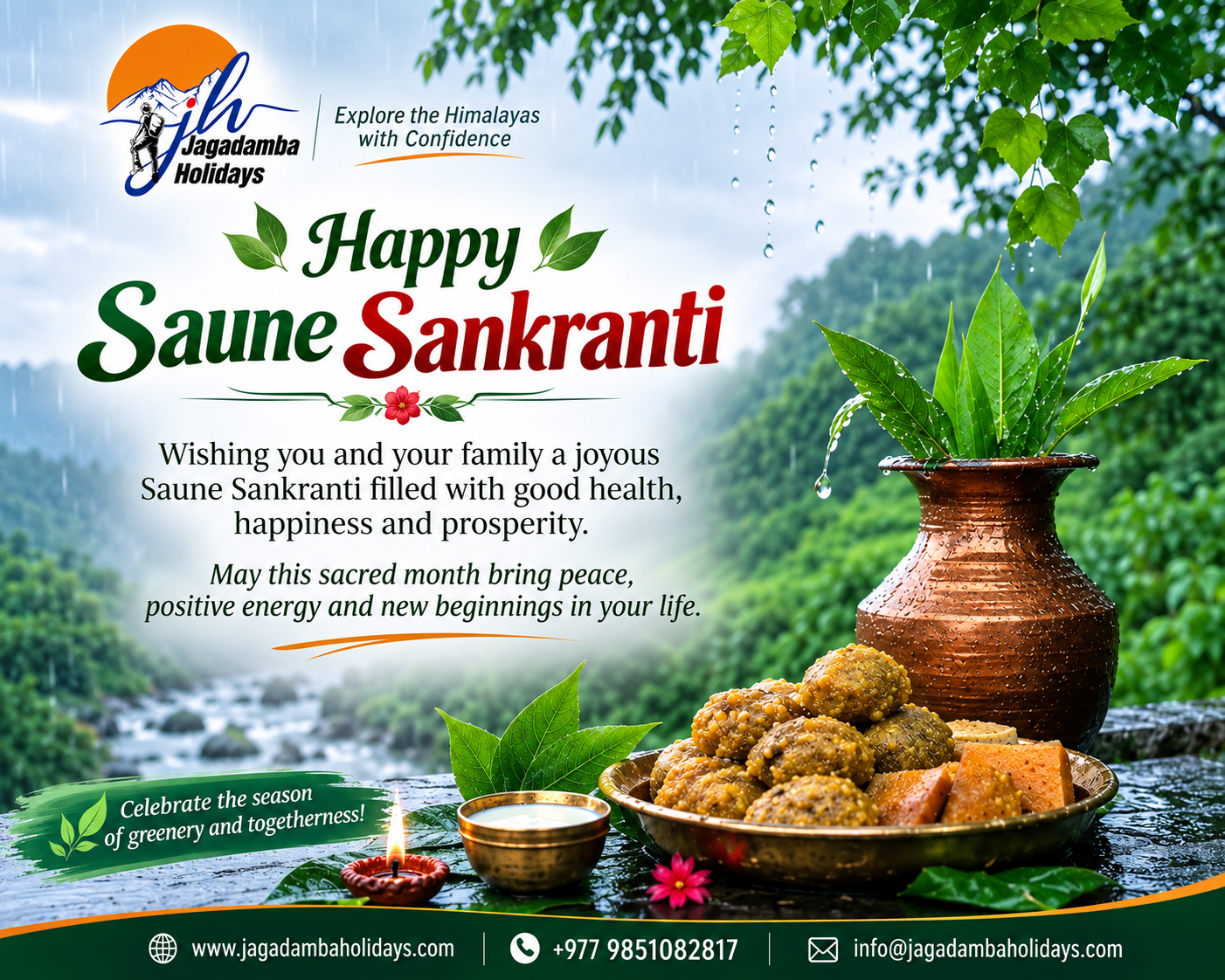
Every year, the arrival of the Nepali month of Shrawan (Saun) brings fresh rain, lush green landscapes, and a renewed sense of hope. Saune Sankranti, celebrated on the first day of Shrawan, marks the beginning of this sacred month and is one of Nepal's most cherished seasonal festivals. It symbolizes prosperity, gratitude, good health, and harmony with nature while holding deep spiritual significance for devotees of Lord Shiva. As the monsoon transforms the hills, forests, rivers, and valleys into vibrant shades of green, people across Nepal welcome Saune Sankranti with traditional foods, religious rituals, family gatherings, and heartfelt wishes for peace and prosperity.
What is Saune Sankranti?
Saune Sankranti is a traditional Hindu festival observed on the first day of the Nepali month of Shrawan. According to the solar calendar, it marks the Sun's transition into the zodiac sign of Cancer (Karkat). The festival signals the peak of Nepal's monsoon season and the beginning of one of the holiest months in the Hindu calendar. The arrival of Shrawan has long been associated with renewal and abundance. Farmers welcome the rains that nourish their crops, while families celebrate nature's blessings and pray for health, happiness, and success.
The Spiritual Significance of Shrawan
Shrawan is especially sacred to Lord Shiva, one of the principal deities in Hinduism. Throughout the month, thousands of devotees visit Shiva temples across Nepal every Monday, known as Shrawan Sombar, to offer milk, holy water, flowers, and Bilva (Bael) leaves. Many people observe fasting, perform prayers, and participate in religious ceremonies seeking blessings for their families and loved ones. Temples become vibrant centers of devotion, attracting worshippers from early morning until evening. Some of Nepal's most visited Shiva temples during Shrawan include Pashupatinath Temple in Kathmandu, Doleshwor Mahadev in Bhaktapur, Kailashnath Mahadev in Sanga, Kirateshwor Mahadev in Kathmandu, and local Shiva temples throughout Nepal.
Why is Saune Sankranti Called Nepal's Green Festival?
Shrawan is often considered Nepal's Green Festival because the entire country comes alive with the beauty of the monsoon. The rain nourishes forests, rivers flow at full strength, rice fields turn emerald green, and mountain landscapes become breathtakingly fresh. Many people also wear green clothing and green bangles during the month, symbolizing growth, prosperity, happiness, and new beginnings. The combination of spirituality, nature, and seasonal traditions makes Saune Sankranti one of Nepal's most beautiful cultural celebrations.
Traditional Foods of Saune Sankranti
Food plays an important role in the celebration. Families prepare seasonal dishes that have been enjoyed for generations and are traditionally believed to strengthen the body during the rainy season. Popular foods include Ghee (Clarified Butter), Chaku (Traditional Molasses Candy), Kheer (Rice Pudding), Tarul (Yam), Sweet Potatoes, Seasonal Green Vegetables, Fresh Local Fruits, and Homemade Pickles. Sharing these meals with family and friends reflects Nepal's rich culinary heritage and community spirit.
Cultural Traditions During Shrawan
Throughout the month of Shrawan, many cultural and religious customs are observed across Nepal. Common traditions include visiting Shiva temples every Monday, offering milk, water, flowers, and Bilva leaves, wearing green clothes and bangles, applying mehendi (henna), preparing traditional seasonal foods, spending time with family and relatives, and offering prayers for peace, prosperity, and well-being. These customs continue to be passed from one generation to another, preserving Nepal's unique cultural identity.
Experience Nepal During the Monsoon
Although autumn is Nepal's most popular travel season, the monsoon months reveal a quieter and greener side of the country. Travelers visiting Nepal during Shrawan can experience mist-covered Himalayan foothills, spectacular waterfalls, lush forests and rice terraces, fresh mountain air, peaceful villages, authentic cultural festivals, spiritual temple visits, and beautiful landscapes for photography. While some high-altitude trekking routes receive heavy rainfall, destinations in rain-shadow regions such as Upper Mustang and Dolpo remain excellent travel options during the monsoon.
Saune Sankranti Wishes
Saune Sankranti is more than a festival—it is a celebration of nature, faith, family, and hope. It reminds us to appreciate the blessings of the rainy season, strengthen our relationships, and embrace new opportunities with optimism. May the refreshing rains of Shrawan wash away every difficulty and fill your life with peace, happiness, success, and prosperity.
Warm Greetings from Jagadamba Holidays Nepal
May this sacred month bring Good health, Peace and happiness, Prosperity and success, Safe journeys, Harmony with nature, and Countless memorable adventures. We wish you and your family a joyful, healthy, and prosperous Happy Saune Sankranti!
Frequently Asked Questions
When is Saune Sankranti celebrated?
Saune Sankranti is celebrated on the first day of the Nepali month of Shrawan, marking the beginning of the sacred month and the peak of the monsoon season.
Why is Shrawan important?
Shrawan is dedicated to Lord Shiva and is considered one of the holiest months in the Hindu calendar. Many devotees visit Shiva temples, observe fasting, and perform special prayers.
Why do people wear green during Shrawan?
Green represents nature, fertility, prosperity, and new beginnings. It also reflects the lush landscapes created by the monsoon rains.
What foods are traditionally eaten on Saune Sankranti?
Traditional foods include ghee, chaku, kheer, tarul (yam), sweet potatoes, seasonal vegetables, and fresh fruits.
Is Shrawan a good time to visit Nepal?
Yes. Shrawan offers beautiful green scenery, cultural experiences, and fewer crowds. While rainfall affects some trekking routes, rain-shadow regions such as Upper Mustang remain excellent destinations.
Happy Saune Sankranti from Jagadamba Holidays Nepal! May this beautiful Green Festival bring joy, prosperity, and unforgettable journeys throughout the year.