

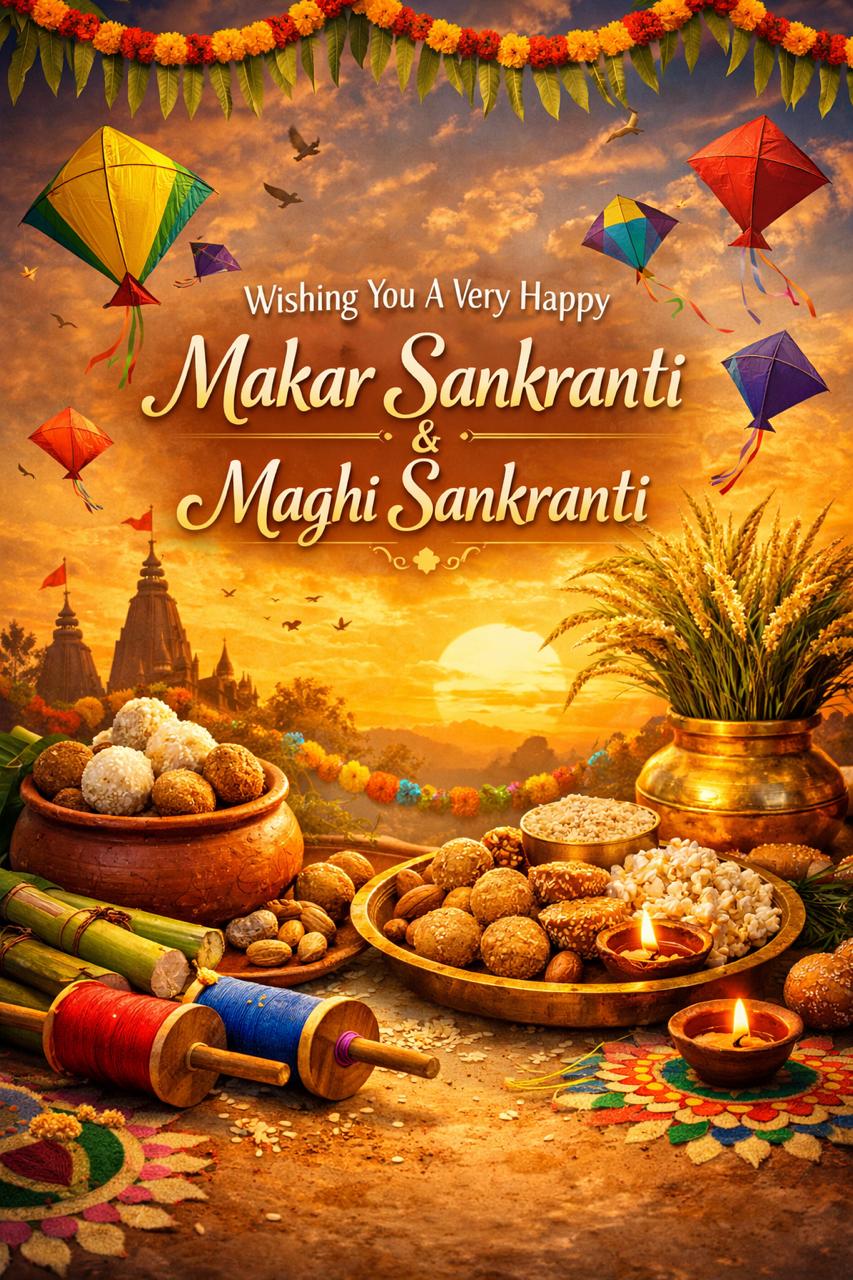

A harvest festival marking the sun’s transition into Capricorn and the beginning of longer days
Makar Sankranti is a major harvest festival celebrated across Nepal and India, marking the Sun’s transition into the zodiac sign Capricorn (Makara). This celestial movement is believed to signal the beginning of Uttarayan, the northward journey of the Sun, after which days grow longer and nights shorter. The festival symbolizes renewal, prosperity, spiritual awakening, and harmony with nature.
Observed annually in mid-January, Makar Sankranti is one of the few Hindu festivals celebrated on a fixed solar date, making it astronomically and culturally significant.
Religious and Spiritual Significance
Makar Sankranti is considered highly auspicious in Hindu tradition. The beginning of Uttarayan is believed to mark a favorable period for spiritual practices, righteous deeds, and new beginnings. Activities such as holy bathing, charity, fasting, meditation, and prayer are believed to bring spiritual merit and positive energy.
In Nepal, the festival is widely known as Maghe Sankranti and is especially significant as the start of the holy month of Magh. Devotees visit sacred rivers and pilgrimage sites to perform Maghe Snan (holy bathing), believing it cleanses sins and brings good health.
In India, Makar Sankranti is associated with devotion and charity, with sesame seed donations considered especially sacred. Religious scriptures suggest that acts of generosity performed on this day yield multiplied spiritual rewards.
Celebrations in Nepal
In Nepal, Maghe Sankranti is celebrated with deep religious devotion and cultural traditions. Large gatherings take place at rivers and holy confluences where people perform ritual bathing and offer prayers. The festival is also linked with the observance of the Swasthani Brata Katha, a month-long religious practice observed by many devotees.
Traditional foods play an important role in Nepali celebrations. People consume ghee, chaku (molasses-based sweet), sesame preparations, yam, spinach, and khichadi, which help keep the body warm during winter. According to Ayurveda, these foods balance the body’s three doshas—Vata, Pitta, and Kapha—promoting overall well-being.
Maghe Sankranti is also celebrated as a time of social harmony, family gatherings, and respect for traditional agricultural practices.
Celebrations in India
In India, Makar Sankranti is celebrated with regional diversity and vibrant customs. While the core significance remains the same, the festival is known by different names across states:
- Pongal in Tamil Nadu
- Uttarayan in Gujarat
- Magh Bihu in Assam
- Khichdi Festival in Uttar Pradesh
One of the most popular traditions associated with Makar Sankranti in India is kite flying, symbolizing freedom, joy, and the arrival of brighter days. Harvest-related rituals are central to the celebrations, as farmers express gratitude for crops and pray for future prosperity.
Special dishes made of sesame seeds, jaggery, rice, and lentils are prepared, reflecting the agricultural roots of the festival.
Health and Seasonal Importance
Makar Sankranti occurs during the peak of winter, and its traditional foods are carefully chosen to suit the season. Sesame seeds, ghee, jaggery, and root vegetables provide warmth, strengthen immunity, and support digestion.
Ayurvedic traditions also recommend sesame oil massage on this day to improve blood circulation, strengthen bones and muscles, and detoxify the body. These practices highlight the festival’s holistic connection to physical and mental health.
A Festival of Unity and Renewal
Across Nepal and India, Makar Sankranti represents renewal, gratitude, and hope. It bridges spirituality, agriculture, health, and culture, reminding communities of their connection to nature and cosmic rhythms.
Despite regional variations in rituals and names, the essence of the festival remains the same—welcoming light, positivity, and abundance into life.