
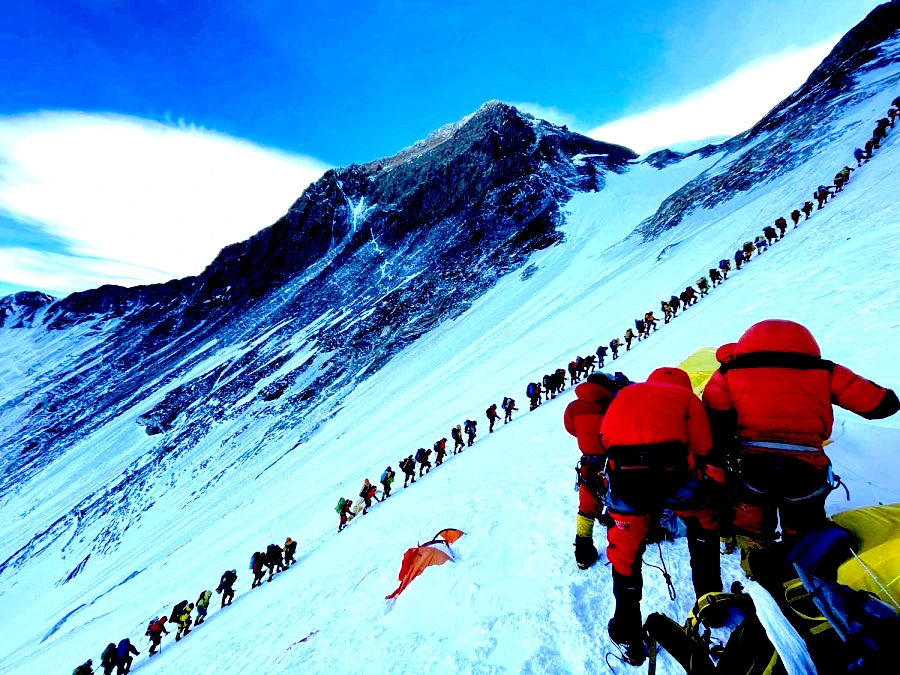
Mountaineering Permit Fees for Everest and Himalayan Peaks
Nepal Revises Mountaineering Permit Fees for Everest and High Himalayan Peaks – Nepal has officially updated mountaineering permit fees for Mount Everest and other high Himalayan peaks, marking the first major fee hike in nearly a decade. The new rates, effective from autumn 2025, have been confirmed by the Department of Tourism, Nepal, and include mandatory licensed guide requirements to enhance safety and promote sustainable mountaineering practices. Whether planning an Everest expedition or aiming for other peaks like Ama Dablam, Baruntse, or Lhotse, understanding the latest climbing permit fees and mountaineering regulations is crucial for budgeting, planning, and legal compliance.
Everest Permit Fees 2025/2026
Mount Everest, the world’s highest peak, has seen the most significant increase in permit fees:
Foreign climbers – Normal South Route:
- Spring (Mar–May): USD 15,000 (previously USD 11,000)
- Autumn (Sep–Nov): USD 7,500 (previously USD 5,500)
- Winter & Monsoon (Dec–Feb & Jun–Aug): USD 3,750 (previously USD 2,750)
Nepali climbers:
- Spring-season fee doubled to NPR 150,000
- These fees are mandatory for all climbers and cover legal permits issued by the Department of Tourism.
Permit Fees for Peaks Above 8,000 Meters
All other Himalayan peaks above 8,000 meters (excluding Everest) have also seen increases:
- Spring: USD 3,000
- Autumn: USD 1,500
- Winter & Monsoon: USD 750
This affects popular peaks such as Lhotse, Makalu, Cho Oyu, and Manaslu, providing a standardized fee structure for high-altitude expeditions.
Mandatory Guide Regulations
The revised regulations now require licensed guides for all Himalayan expeditions:
- Everest & peaks above 8,000 meters: 1 guide for every 2 climbers
- Mountains below 8,000 meters: 1 guide for every 15 climbers
These regulations ensure climbers have professional support, enhancing safety and responsible trekking practices across the region.
Peaks Below 8,000 Meters
Popular Himalayan peaks such as Ama Dablam (6,812 m), Baruntse (7,129 m), and other trekking peaks remain under the previous permit structure. For example:
Ama Dablam permit fees:
- Spring: USD 400
- Autumn: USD 400
- Winter/Summer: USD 200
Guide requirements still apply, ensuring safety during expeditions.
Why Nepal Updated Climbing Permit Fees
The fee revision reflects Nepal’s focus on:
- Mountain safety and rescue preparedness
- Environmental protection in fragile alpine zones
- Sustainable tourism and responsible mountaineering
- Updating regulations after nearly a decade
With thousands of climbers attempting Everest and other Himalayan peaks each year, proper crowd management, infrastructure support, and safety measures are essential.
What This Means for Climbers
- Climbers planning Himalayan expeditions should:
- Budget carefully for higher permit fees on Everest and 8,000+ meter peaks
- Comply with mandatory guide regulations
- Work with reputable local operators to secure permits
- Book expeditions well in advance to avoid delays
Jagadamba Holidays: Your Trusted Himalayan Expedition Partner
Jagadamba Holidays provides:
- Complete permit management and legal compliance
- Experienced licensed guides and Sherpa support
- Up-to-date information on Nepal’s mountaineering regulations
- Transparent pricing with no hidden costs
- Support for expeditions on Everest, Ama Dablam, Baruntse, and other Himalayan peaks
- With Jagadamba Holidays, climbers can focus entirely on the adventure while we manage permits, guides, and logistics.
Key Takeaways
- Everest and peaks above 8,000 meters now have revised climbing permit fees
- Peaks below 8,000 meters, including Ama Dablam, remain under previous fee structures
- Licensed guides are mandatory for all expeditions
- Planning with a trusted operator like Jagadamba Holidays ensures a safe, legal, and smooth Himalayan experience
Plan Your Himalayan Expedition Today
Secure your climbing permits and expedition logistics with Jagadamba Holidays, Nepal’s trusted adventure travel agency.
WhatsApp / Call: +977 9851082817
Frequently Asked Questions
What is the new Mount Everest climbing permit fee in Nepal?
Nepal has increased the Everest climbing permit fee for foreign climbers to USD 15,000 per person for the spring season. The autumn fee is USD 7,500, while winter and monsoon permits cost USD 3,750.
When did the new Everest permit fees come into effect?
The revised permit fees were officially implemented from the start of the autumn season, as confirmed by the Department of Tourism, Nepal.
Do the new permit fees apply to all mountains in Nepal?
No. The major increase applies to Mount Everest and peaks above 8,000 meters. Mountains below 8,000 meters, such as Ama Dablam and Baruntse, fall under separate permit categories and are not affected by the Everest-specific hike.
What are the new permit fees for peaks above 8,000 meters other than Everest?
For peaks above 8,000 meters (excluding Everest), the revised fees are USD 3,000 in spring, USD 1,500 in autumn, and USD 750 in winter and monsoon seasons.
Are Nepali climbers also affected by the new permit fees?
Yes. For Nepali climbers, the spring-season Everest permit fee has doubled from NPR 75,000 to NPR 150,000.
Is hiring a guide mandatory under the new rules?
Yes. Nepal’s revised mountaineering regulations now require one licensed guide for every two climbers on Everest and all peaks above 8,000 meters. For mountains below 8,000 meters, one guide is required for every fifteen climbers.
Has the Ama Dablam permit fee changed under the new regulations?
No. Ama Dablam (6,812 m) is below 8,000 meters, and its permit fee remains unchanged under the current revision. However, guide requirements still apply.
Why did Nepal increase climbing permit fees after so many years?
The government revised the fees to support mountain safety, environmental protection, rescue preparedness, and sustainable mountaineering, as the previous permit structure had remained unchanged since 2015.
Who handles climbing permits in Nepal?
Climbing permits are issued by the Department of Tourism, Nepal. Licensed local agencies like Jagadamba Holidays manage the full permit process on behalf of climbers.