PANGPEMA BASE CAMP TREK
US$3,900.00
/pp
-
26 Days
-
Kanchenjunga
-
Spring/Autumn
-
Trekking
-
5,930 Meters
-
Hard
-
Car / Plane
-
02-32 People
-
JH#272
 Overviews
The Pangpema Base Camp Trek, also known as the Kanchenjunga Base Camp Trek, is one of Nepal’s most remote and extraordinary high-altitude adventures. This remarkable journey leads to the North Base Camp of Mount Kanchenjunga (8,586 m), the third-highest mountain in the world. Located in the pristine eastern Himalayas within the protected Kanchenjunga Conservation Area, the route offers dramatic glacier landscapes, authentic mountain culture, and a true wilderness experience far from the busy Everest and Annapurna regions. Often referred to as the North Kanchenjunga Base Camp route, this trek reaches Pangpema at the northern base of Kanchenjunga near the Nepal–India border. It remains one of the most exclusive and least crowded trekking experiences in Nepal, ideal for travellers seeking solitude and raw Himalayan beauty. Designed for experienced trekkers, the Pangpema Base Camp Trek combines challenging alpine terrain with meaningful cultural immersion. Limited tourist traffic, untouched trails, and uninterrupted panoramic views create a genuine expedition atmosphere while maintaining professional guiding standards and structured acclimatisation. The journey typically spans 18 to 22 days, depending on route design and altitude progression. Beginning in eastern Nepal, the trail gradually ascends through diverse ecological zones. Early stages pass through subtropical river valleys, terraced farmland, and traditional hillside settlements. Dense forests of rhododendron, pine, and bamboo create vibrant scenery, particularly during spring when flowers bloom across the hillsides. As altitude increases, the landscape transitions into alpine meadows, yak pastures, and expansive glacial valleys. Snow-covered Himalayan peaks begin to dominate the skyline, building anticipation for the dramatic arrival at Pangpema. The final approach follows a powerful glacial corridor surrounded by moraine fields and icy streams, leading directly beneath Kanchenjunga’s immense north face. At approximately 5,143 metres, Pangpema Base Camp offers one of Nepal’s most breathtaking mountain panoramas. From this remarkable vantage point, trekkers witness the towering north face of Kanchenjunga rising sharply above the glacier. Sunrise and sunset light transform the snow slopes into glowing shades of gold and pink, creating unforgettable Himalayan moments. Reaching this remote base camp is both physically demanding and profoundly rewarding. Cultural authenticity is one of the defining strengths of this journey. The eastern Himalayan region is home to Rai, Limbu, and Sherpa communities who maintain traditional agricultural lifestyles and preserve ancestral customs. Along the trail, trekkers encounter stone-built villages, colourful prayer flags, and small monasteries reflecting deep-rooted Himalayan spirituality. Because tourism remains limited in this region, interactions feel genuine and respectful rather than commercialised. Accommodation combines comfortable mountain lodges with a short wilderness camping experience. In lower and mid-altitude villages, trekkers stay in locally operated teahouse lodges offering twin-sharing rooms and freshly prepared meals. Facilities are simple yet comfortable, providing essential rest after long trekking days. As the route approaches Pangpema, infrastructure becomes limited due to remoteness. The final section requires fully supported camping, typically involving two nights near base camp. This high-altitude adventure is classified as challenging and is best suited for trekkers with strong physical fitness and prior mountain experience. Daily walking durations generally range from five to eight hours, with steady altitude gain throughout the itinerary. Proper acclimatisation days are incorporated to minimise altitude-related risks, and mental resilience is essential in changing Himalayan weather conditions. Due to its restricted area status, special permits are mandatory. Independent trekking is not permitted, and a licensed Nepal trekking guide is required. All logistics must be arranged through a registered agency to ensure safety and compliance with conservation regulations. The best seasons for this journey are spring (March to May) and autumn (September to November), when weather conditions are stable and mountain visibility is exceptional. Winter snowfall and monsoon rainfall can make the route more challenging. For adventure travellers seeking a remote Himalayan expedition, meaningful cultural immersion, and awe-inspiring glacier scenery, the Pangpema Base Camp Trek stands among Nepal’s most remarkable trekking experiences. It offers isolation, authenticity, and the unforgettable presence of Kanchenjunga rising above the eastern Himalayas.
Itinerary (Plan)
Full of anticipation for the journey ahead, you arrive in Nepal’s vibrant capital, Kathmandu, situated at approximately 1,350 meters above sea level. A country synonymous with the legendary eight-thousanders, world-class trekking routes, profound Buddhist heritage, and genuine Himalayan hospitality, Nepal truly represents the spirit of adventure and cultural discovery. Upon arrival at Tribhuvan International Airport (1,339 m / 4,395 ft), you will complete your visa and immigration formalities and collect your luggage. Our representative from Jagadamba Holidays will meet you inside the arrival terminal, before the exit gate — near the Himalayan Java Café area, in front of the escalator and elevator. The representative will be holding a placard with your name and company logo for easy identification. After greeting, you will be escorted to your private vehicle for a comfortable transfer to your hotel in Thamel, Kathmandu’s lively and traveler-friendly district. Kathmandu (1,350 m / 4,429 ft) is the cultural and historical heart of Nepal and the main gateway to the Himalayas. The city beautifully blends ancient temples, bustling local markets, sacred shrines, and vibrant street life, offering a fascinating first impression of the country. After check-in, the remainder of the day is at leisure. Depending on your arrival time, you may take a gentle walk through Thamel’s lively neighborhood, where the scent of incense drifts through the air, prayer flags flutter above the streets, and small local businesses create a vibrant atmosphere that reflects the spirit of Kathmandu. The atmosphere is energetic yet welcoming — a perfect introduction to Nepal. If time permits, you may walk to Kathmandu Durbar Square, a UNESCO World Heritage Site located about 30 minutes from your hotel. This historic royal complex features intricately carved temples, ancient courtyards, and traditional Newari architecture that reflect centuries of rich cultural heritage in the Kathmandu Valley. In the evening, enjoy a traditional Nepali welcome dinner at a local restaurant, where you will be introduced to authentic dishes such as dal bhat and momos. A short trip briefing will be provided, giving you the opportunity to clarify any remaining questions and prepare for the exciting adventures that await in the Nepal Himalayas. Overnight accommodation is provided in a deluxe twin-sharing room at Kathmandu Guest House or a hotel of similar category in Kathmandu. Breakfast is included.
Your journey toward the remote Kanchenjunga region begins with an early transfer to Kathmandu Domestic Airport after breakfast. Board a picturesque 45-minute domestic flight from Kathmandu to Bhadrapur (94 m), located in the lush subtropical lowlands of eastern Nepal. As the aircraft soars above terraced hills, winding rivers, and distant Himalayan peaks, enjoy breathtaking aerial views before descending into the warm, fertile plains of the Terai region. In clear weather, the flight provides impressive aerial views of river valleys, terraced farmland, and distant Himalayan peaks stretching across the horizon. Upon arrival in Bhadrapur, continue with a picturesque overland drive to Phidim (1,157 m / 3,796 ft), covering approximately 145 kilometres in about 4-5 hours. The route gradually ascends from the lowland Terai plains into rolling mid-hills, creating a dramatic shift in scenery and climate. As elevation increases, cardamom farms, tea plantations, and forested hills dominate the landscape, offering a beautiful introduction to eastern Nepal. Phidim, located in Panchthar District, serves as a key gateway to the Kanchenjunga Base Camp Trek and the eastern Himalayan trekking region. Encircled by rolling green hills and framed by distant snow-capped Himalayan peaks, the town presents sweeping panoramic views and a tranquil hillside setting. On clear days, sections of the Kanchenjunga massif may be visible in the distance. After checking into your hotel, explore Phidim Bazaar, where the traditions of Limbu and Rai communities are reflected in daily life, architecture, and local cuisine. Nearby, the renowned Ilam tea gardens provide scenic viewpoints and short walking opportunities through lush plantations that have made this region famous for premium Himalayan tea. Phidim is also known for birdwatching and local handicrafts, and it functions as an important transit point for trekkers entering the Kanchenjunga Conservation Area. The relaxed environment offers a comfortable transition from urban Kathmandu to the more remote mountain trails ahead. Overnight accommodation is provided in a twin-sharing room at Hotel Lali Siwahang Resort or a hotel of similar category in Phidim. Breakfast and dinner are included.
After a hearty breakfast at the hotel in Phidim, the journey continues with a scenic drive to Taplejung (1,820 m), covering approximately 94 kilometres in around 3–4 hours. As the road winds through the rolling hills of eastern Nepal, the landscape gradually transitions from terraced farmland and rural settlements to the dramatic foothills of the Himalayas. Along the way, enjoy panoramic views of valleys, traditional villages, and forested ridgelines. Upon arrival in Taplejung, the administrative gateway to the Kanchenjunga region, preparations begin for the first trekking stage toward Mitlung (921 m / 3,022 ft.). The trail descends gently through mixed forests, terraced fields, and scattered hillside communities, offering insight into the traditional lifestyle of eastern Nepal. The trek from Taplejung to Mitlung covers approximately 8 kilometres and typically takes 3–4 hours. Today’s route involves minimal ascent and an overall descent of approximately 870 metres, making it a moderate and pleasant introduction to the trekking portion of the journey. Mitlung is a small riverside settlement surrounded by lush vegetation and peaceful countryside. Upon arrival, check into a local lodge or guesthouse and enjoy time to relax after the combined drive and trek. The tranquil environment provides a comfortable transition into the more remote Himalayan terrain ahead. Overnight accommodation is provided in a twin-sharing room at Hotel Pathivara or guesthouse in Mitlung. Breakfast, lunch, and dinner are included.
After a hearty breakfast at the lodge in Mitlung, the trek continues toward Chirwa (1,270 m / 4,167 ft.), following the scenic trails of the Tamor Valley. The route passes through lush forests, terraced farmland, and traditional hillside villages, offering authentic glimpses of rural life in eastern Nepal. The trail undulates gently along the Tamor River, crossing suspension bridges that provide picturesque views of the flowing water and surrounding green hills. As the elevation gradually increases, the landscape opens into broader valleys and cultivated fields, with rolling hills rising in the distance. The trek from Mitlung to Chirwa covers approximately 12 kilometres and typically takes 5–6 hours. Today’s route includes an ascent of about 560 metres and a descent of approximately 220 metres, making it a moderately challenging yet rewarding walking day. Chirwa is a welcoming riverside settlement known for its warm local hospitality and simple trekking lodges. Upon arrival, enjoy time to relax, explore the village, and interact with local residents. This stage of the journey offers a peaceful immersion into the natural beauty and cultural richness of the Kanchenjunga trekking region. Overnight accommodation is provided in a twin-sharing room at Kanchenjunga Guest House or guesthouse in Chirwa. Breakfast, lunch, and dinner are included.
After a hearty breakfast at the hotel in Chirwa, the trail continues toward Sekathum (1,640 m / 5,381 ft.), entering a dramatic and increasingly narrow section of the Tamor Valley. This stage of the trek offers a beautiful combination of riverside scenery, forested hillsides, and traditional mountain settlements. The route follows the Tamor River, crossing several suspension bridges above rushing waters and passing through lush subtropical forests. Along the way, villages such as Phembu and Lelep provide insight into local Limbu and Rai culture, with traditional houses and terraced farmland lining the valley slopes. As the trail gradually ascends, the landscape becomes more rugged and dramatic, with steep gorge walls and cascading waterfalls enhancing the scenic beauty. The trek covers approximately 11 kilometres and typically takes 5–6 hours, with a gradual ascent of about 485 metres and a descent of approximately 120 metres. Sekathum is a small riverside settlement located at the junction of key trekking routes leading deeper into the Kanchenjunga Conservation Area. Surrounded by dense forest and rising mountain ridges, it serves as an important entry point into the higher alpine sections of the Kanchenjunga Base Camp Trek. Overnight accommodation is provided in a twin-sharing room at Sekathum Guest House or guesthouse in Sekathum. Breakfast, lunch, and dinner are included.
After breakfast at the lodge in Sekathum, the trek continues to Amjilosa (2,395 m / 7,858 ft.), entering a more rugged and forested section of the Kanchenjunga region. This stage marks a steady elevation gain and a gradual transition into quieter alpine terrain. The trail follows narrow mountain paths above the Tamor River, crossing suspension bridges and passing small settlements such as Jongim and Lamatar. Dense forests of bamboo and rhododendron line the valley, while steep gorge walls create dramatic scenery typical of the eastern Himalayas of Nepal. The distance from Sekathum to Amjilosa is approximately 7 kilometres and typically requires 5–6 hours of trekking due to the sustained ascent. During the trek to Amjilosa, we ascend approximately 950 metres with only a minimal descent of around 150 metres, making it one of the more demanding sections of the Kanchenjunga Base Camp Trek. Amjilosa is a peaceful mountain settlement perched above the river valley, offering scenic views and a tranquil atmosphere as the journey progresses deeper into the Kanchenjunga Conservation Area. The village provides a comfortable resting point before entering higher alpine landscapes in the days ahead. Overnight accommodation is provided in a twin-sharing room at Chhiring Guest House, or guesthouse in Amjilosa. Breakfast, lunch, and dinner are included.
After breakfast at the lodge in Amjilosa, the trek continues to Gyabla (2,730 m / 8,957 ft.), ascending further into the upper reaches of the Kanchenjunga region. The trail climbs steadily through dense forests of rhododendron, bamboo, and pine, following rocky mountain paths above the valley floor. As elevation increases, the landscape becomes more alpine, with occasional views of surrounding Himalayan ridgelines and cascading mountain streams. The route passes small traditional settlements, offering glimpses into the local lifestyle of this remote trekking area. The distance from Amjilosa to Gyabla is approximately 8 kilometres and typically requires 5–6 hours of trekking. Today’s route includes an ascent of about 510 metres and a descent of approximately 200 metres, making it a moderately challenging but rewarding walking day. Gyabla is a peaceful mountain village surrounded by forested hills and open pastureland. The tranquil setting provides a comfortable resting point as the trek progresses deeper toward the higher elevations of the Kanchenjunga Base Camp Trek. Overnight accommodation is provided in a twin-sharing room at Namaste Hotel & Lodge or guest house in Gyabla. Breakfast, lunch, and dinner are included.
After breakfast at the lodge in Gyabla, the trek continues to Ghunsa (3,427 m / 11,243 ft.), ascending deeper into the alpine zone of the Kanchenjunga region. The trail climbs gradually through alpine forests of pine and rhododendron, crossing glacial-fed streams and following the scenic Ghunsa River valley. As elevation increases, the landscape opens to wider mountain views, with snow-capped ridges rising above the valley floor. The route passes traditional Tibetan-influenced villages, where stone houses, prayer flags, and mani walls reflect the cultural heritage of this high Himalayan region. The distance from Gyabla to Ghunsa is approximately 10 kilometres, typically requiring 6–7 hours of trekking. During today’s trek to Ghunsa, the route gains approximately 930 metres in elevation with only minimal descent of around 110 metres. This marks a significant climb as the journey progresses into higher alpine terrain, making it a moderately challenging yet rewarding stage of the trek. Ghunsa is one of the largest and most important settlements in the upper Kanchenjunga Conservation Area. Surrounded by towering peaks and forested slopes, the village offers a peaceful setting ideal for rest and acclimatisation before continuing toward the higher sections of the Kanchenjunga Base Camp Trek. Overnight accommodation is provided in a twin-sharing room at Dzonga Family House Lodge or guesthouse in Ghunsa. Breakfast, lunch, and dinner are included.
After breakfast at the lodge in Ghunsa (3,427 m), the day is dedicated to acclimatisation with an exploratory hike toward Nango Kharka (4,160 m) in the upper reaches of the Kanchenjunga region. The trail follows the scenic Nango Valley, gradually ascending through alpine terrain characterised by rocky paths, glacial streams, and high-altitude meadows. During spring and early summer, the slopes are decorated with wildflowers, while clear weather provides expansive views of surrounding Himalayan ridgelines. This acclimatisation hike allows gradual elevation gain before returning to Ghunsa for overnight rest, an essential step in preparing for higher altitudes on the Kanchenjunga Base Camp Trek. The route offers excellent mountain scenery and a deeper appreciation of the remote alpine environment within the Kanchenjunga Conservation Area. After reaching Nango Kharka and spending time enjoying the panoramic views, the trail descends back to Ghunsa. The hike to Nango Kharka takes approximately 3–4 hours. During the hike, we ascend about 733 metres and descend the same 733 metres on the return walk. Overnight accommodation is provided in a twin-sharing room at Dzonga Family House Lodge or guesthouse in Ghunsa. Breakfast, lunch, and dinner are included.
After breakfast at the lodge in Ghunsa, the trek continues to Khangpachen (4,120 m / 13,517 ft.), progressing further into the high alpine zone of the Kanchenjunga region. The trail follows the upper Ghunsa Valley, gradually ascending along rocky paths and glacial terrain. Dense forests of pine and rhododendron give way to open alpine landscapes as elevation increases. Along the route, expansive views of surrounding peaks begin to dominate the skyline. The path passes through yak pastures and rugged high-altitude terrain, offering clear views of Mount Jannu (Kumbhakarna, 7,710 m), one of the most striking peaks in the eastern Himalayas. Waterfalls cascade down steep valley walls, and the environment becomes increasingly dramatic as the trek gains elevation. The distance from Ghunsa to Khangpachen is approximately 10.5 kilometres, typically requiring 5–6 hours of trekking. During today’s stage to Khangpachen, the trail ascends approximately 750 metres with only a gentle descent of around 180 metres. This marks a significant elevation gain and continued acclimatisation as the journey approaches the higher sections of the Kanchenjunga Base Camp Trek. Khangpachen is a small alpine settlement surrounded by towering peaks and glacial landscapes. The peaceful atmosphere makes it an ideal location for rest and altitude adaptation within the Kanchenjunga Conservation Area. Overnight accommodation is provided in a twin-sharing room at Kanchenjunga White House Lodge or guesthouse in Khangpachen. Breakfast, lunch, and dinner are included.
After breakfast at the lodge in Khangpachen, the trek continues to Lhonak (4,780 m / 15,682 ft.), entering a stark and dramatic section of the upper Kanchenjunga region. The trail follows the lateral moraines of the Kanchenjunga Glacier, ascending gradually through rugged alpine terrain. Dense vegetation disappears at this altitude, replaced by barren slopes, rocky paths, and glacial streams flowing through the valley floor. The landscape becomes increasingly vast and open, revealing panoramic views of surrounding Himalayan peaks. As elevation increases, the air becomes noticeably thinner and the environment more exposed. The route offers impressive perspectives of high mountain ridges and glacial formations, marking a significant transition into the true high-altitude zone of the Kanchenjunga Base Camp Trek. The distance from Khangpachen to Lhonak is approximately 9 kilometres, typically requiring 4–5 hours of trekking. Today’s route includes an ascent of approximately 820 metres with minimal descent of around 80 metres. This makes it a demanding but essential acclimatisation stage before reaching higher elevations. Lhonak is a remote high-altitude settlement located within the Kanchenjunga Conservation Area, surrounded by dramatic glacial landscapes and towering peaks. The isolated setting provides a true wilderness atmosphere as the expedition approaches its final ascent toward base camp. Overnight accommodation is provided in a twin-sharing room at Kanchenjunga Iceland Guest House or guesthouse in Lhonak. Breakfast, lunch, and dinner are included.
After breakfast at the lodge in Lhonak, the trek continues to Pangpema Base Camp (5,150 m / 16,896 ft.), the North Base Camp of Mount Kanchenjunga, following the upper moraines of the Kanchenjunga Glacier. Mount Kanchenjunga (8,586 m) is the third-highest mountain in the world, located on the border between Nepal and Sikkim, India. Revered as the “Five Treasures of Snow,” the massif comprises five distinct summits rising prominently above the eastern Himalayas. The trail ascends gradually across rocky glacial terrain and high-altitude moraine fields. Vegetation becomes sparse at this elevation, and the landscape is dominated by ice formations, rugged slopes, and expansive alpine vistas. As altitude increases, the environment grows more exposed, requiring a steady pace and careful acclimatisation. The distance from Lhonak to Pangpema is approximately 7.65 kilometres and typically requires 3–4 hours of trekking. Today’s route includes an ascent of about 430 metres and a descent of approximately 50 metres, marking the final climb to the highest overnight point of the Kanchenjunga Base Camp Trek. Upon arrival at Pangpema, panoramic views of the Kanchenjunga massif dominate the skyline. The immense north face rises directly above the glacier, surrounded by towering peaks and vast icefields within the Kanchenjunga Conservation Area. This location offers one of the most dramatic high-altitude panoramas in the eastern Himalayas. After time for exploration and photography, return to accommodation at base camp. Overnight accommodation is provided in a twin-sharing room at a Pangpema Tea Shop (Dawa Chungda Sherpa , pH: 9863719782) or tented camp in Pangpema Base Camp. Breakfast, lunch, and dinner are included.
An early start marks one of the highlights of this trekking stage, offering the opportunity to witness sunrise over the Kanchenjunga massif as the first light illuminates the surrounding Himalayan peaks. After breakfast at Pangpema Base Camp (5,143 m), the day includes a high-altitude hike to Drohmo Ri (5,965 m), a prominent viewpoint above the Kanchenjunga Glacier. The ascent begins behind Pangpema and follows a gradual climb across rocky moraine terrain. While not technically difficult in dry conditions, the altitude significantly increases the level of challenge. The final 200 metres involve boulder-covered terrain, which may become demanding if snow or ice is present. From the upper viewpoint, panoramic views extend across the Kanchenjunga massif and surrounding glacial basins within the Kanchenjunga Conservation Area. During the Drohmo Ri ascent, we ascend and descend approximately 850 metres in elevation. The hike typically requires around 3 hours for the ascent and about 2 hours for the descent, depending on acclimatisation and individual fitness levels. Proper acclimatisation is essential, and previous nights spent in Khangpachen and Lhonak support safe progression at this elevation. After completing the hike, descend carefully and continue the return trek to Lhonak (4,780 m), retracing the glacial route along the upper moraines. The return trek to Lhonak is largely downhill and takes approximately 2–3 hours, covering around 8 kilometres with only minimal ascent of about 30 metres and a descent of roughly 410 metres. Trekkers who prefer not to participate in the Drohmo Ri ascent may spend additional time exploring the surroundings of Pangpema Base Camp, enjoying close views of the Kanchenjunga massif and the expansive glacial landscape. If the entire group chooses not to attempt the Drohmo Ri climb, the return to Lhonak can begin earlier, allowing for a gradual and relaxed descent through the high-altitude terrain. Overnight accommodation is provided in a twin-sharing room at Kanchenjunga Iceland Guest House or guesthouse in Lhonak. Breakfast, lunch, and dinner are included.
After breakfast at the lodge in Lhonak, the trek descends to Ghunsa (3,427 m / 11,243 ft.), retracing the route through the upper Kanchenjunga region. The trail follows rocky moraine terrain and glacial paths before gradually transitioning into alpine landscapes. Along the descent, panoramic views of the Kanchenjunga massif remain visible in clear weather. Passing through Khangpachen (4,050 m), the landscape begins to change as sparse high-altitude terrain gives way to forests of pine and rhododendron. Continuing along the Ghunsa River valley, the route features cascading waterfalls, steep valley walls, and sections of lush greenery that contrast sharply with the barren glacial landscape above. The return to Ghunsa offers a different perspective of the terrain previously ascended, highlighting the dramatic elevation shift within the Kanchenjunga Conservation Area. The trek from Lhonak to Ghunsa covers approximately 19 kilometres and follows the scenic upper valley of the Kanchenjunga region. The journey typically takes around 7–8 hours to complete, making it one of the longer stages of the return route. The trail ascends gently by about 260 metres before descending approximately 1,570 metres through alpine terrain and glacial landscapes. Upon arrival in Ghunsa, we settle into our lodge for an overnight stay in this traditional Himalayan village, surrounded by the dramatic scenery of the Kanchenjunga Base Camp Trek. Ghunsa is a traditional Sherpa-influenced mountain village known for its monasteries and stone-built houses. Upon arrival, settle into accommodation and rest after the extended descent. Overnight accommodation is provided in a twin-sharing room at Dzonga Family House Lodge or guesthouse in Ghunsa. Breakfast, lunch, and dinner are included.
After breakfast at the lodge in Ghunsa, the trail leaves the northern valley behind and ascends toward Selele Camp (4,220 m), following the high ridge system that links the Ghunsa Valley with the Simbuwa Khola valley in the Kanchenjunga region of eastern Nepal. This route marks the transition toward the southern approach of Mount Kanchenjunga, with distant views extending toward the Yalung Glacier as the landscape gradually opens into high alpine terrain. The path forms part of the scenic three-pass crossing within the Kanchenjunga region, offering a spectacular high-altitude trekking experience. The ascent begins through forests of pine and rhododendron before emerging onto exposed ridgelines with expansive Himalayan panoramas in clear weather. Along the way, the trail passes seasonal yak grazing areas and rugged mountain paths, steadily gaining elevation above the Ghunsa Valley within the protected Kanchenjunga Conservation Area. The trek from Ghunsa to Selele Camp covers approximately 6 kilometres and typically requires 5–6 hours of walking. Today’s stage involves an ascent of around 930 metres and a descent of approximately 180 metres, making it a physically demanding yet rewarding high-mountain crossing as you reach the first of the three passes. Upon arrival at Selele Camp (4,220 m), overnight accommodation is provided at Pemba Hill Side Lodge or a similar mountain lodge. Situated in a remote alpine environment, the camp offers wide mountain views and a true wilderness atmosphere along the Kanchenjunga Base Camp Trek. Breakfast, lunch, and dinner are included.
After an early breakfast at Selele Camp, the trail ascends toward Selele La (4,480 m / 14,698 ft), entering the dramatic alpine ridge system that links the Ghunsa Valley with the Simbuwa Khola valley in the Kanchenjunga region of eastern Nepal. This stage marks one of the most spectacular high-pass crossings along the Kanchenjunga Base Camp Trek, transitioning toward the southern side of the Kanchenjunga massif. From Selele La, the route continues across exposed ridgelines to Mirgin La (4,660 m / 15,289 ft), the highest point of the day, before traversing gentle alpine undulations toward Sinion La (4,646 m / 15,243 ft). This dramatic section forms part of the renowned three-pass crossing within the Kanchenjunga Conservation Area, offering expansive panoramas across the eastern Himalaya. In clear weather, distant eight-thousanders such as Mount Everest, Lhotse, Makalu, and Cho Oyu may be visible on the horizon, while peaks encountered earlier in the trek appear from an entirely new southern perspective. The trek from Selele Camp to Tseram (3,870 m / 12,697 ft) covers approximately 9 kilometres and typically requires 6–7 hours of walking. Today’s stage involves an ascent of around 570 metres and a descent of approximately 920 metres, making it one of the most demanding yet rewarding high-altitude mountain crossings of the Kanchenjunga high-pass section. During the descent toward Tseram, the imposing Kabru massif (7,412 m / 24,318 ft) dominates the southern skyline. Upon arrival in Tseram, you check in at your lodge. Located in a peaceful alpine valley beneath the southern flanks of Mount Kanchenjunga, the settlement offers a remote wilderness atmosphere as the trek gradually approaches the south face of the world’s third-highest mountain. Overnight accommodation is provided in a twin-sharing room at Blue Sheep Hotel & Lodge or a similar guesthouse in Tseram. Breakfast, lunch, and dinner are included.
After breakfast at Tseram (3,870 m / 12,697 ft), the trail continues northward toward Ramche (4,480 m / 14,698 ft), ascending gradually along the upper Yalung Valley in the southern sector of the Kanchenjunga region of eastern Nepal. Ahead, the dramatic terminal moraine of the Yalung Glacier dominates the landscape, rising toward a ridge at approximately 4,300 metres. As elevation increases, the scenery becomes increasingly glaciated, with panoramic views unfolding across the southern flanks of Mount Kanchenjunga (8,586 m / 28,169 ft). The trek from Tseram to Ramche (4,480 m / 14,698 ft) covers approximately 7 kilometres and typically requires 4–5 hours of walking. Today’s stage involves an ascent of around 720 metres and a descent of approximately 120 metres, marking a steady and rewarding climb deeper into the high Himalayan terrain of the Kanchenjunga Base Camp Trek. Along the route, the towering ice walls of the border mountains with Sikkim come into view, including Kokthang (6,148 m / 20,171 ft), Rathong (6,682 m / 21,923 ft), and the impressive Kabru range. The trail eventually reaches a broad plateau along the lateral moraine of the Yalung Glacier, where Ramche is set in a dramatic high-alpine environment. After a short rest at Ramche, the journey continues with an excursion to Oktang Viewpoint (approx. 4,340 m / 14,239 ft), the primary viewpoint of the South Kanchenjunga Base Camp. Following the lateral moraine of the Yalung Glacier, the path crosses alpine slopes and moraine terrain with the glacier constantly in view as you approach the immense southern face of Mount Kanchenjunga. The round-trip distance from Ramche to Oktang is approximately 7 kilometres and typically requires 4 hours of walking. This excursion involves an ascent of around 300 metres and a descent of approximately 300 metres. From this spectacular vantage point within the Kanchenjunga Conservation Area, trekkers enjoy close-up views of glaciers, icefalls, and the dramatic south face of Kanchenjunga, alongside surrounding peaks such as Kangbachen and Yalung Kang. After time for exploration and photography at Oktang, the trail descends back to Ramche via the same scenic route. Overnight accommodation is provided in a twin-sharing room at Chain Hotel & Lodge or a similar guesthouse in Ramche. Breakfast, lunch, and dinner are included.
After breakfast at Ramche, the trail descends toward Tortong (2,995 m / 9,826 ft) through the upper Yalung Valley, marking a significant transition from high alpine terrain to the lower forest zone of the Kanchenjunga region of eastern Nepal. As the day begins, sweeping views of glaciers and snow-covered peaks gradually give way to greener landscapes as elevation decreases. The lower you descend, the lusher the vegetation becomes and temperatures rise noticeably. Rugged moraine slopes transition into dense rhododendron and pine forests within the protected Kanchenjunga Conservation Area. The trail winds through moss-covered trees, cascading waterfalls, and river crossings, showcasing the rich biodiversity of the eastern Himalaya and highlighting the remarkable ecological diversity of the Kanchenjunga Base Camp Trek. The trek from Ramche to Tortong covers approximately 15 kilometres and typically requires 6–7 hours of walking. Today’s stage involves an ascent of around 120 metres and a descent of approximately 1,600 metres, making it one of the most substantial downhill sections of the entire trek. Upon arrival in Tortong, you check in at your hotel. Situated in a peaceful riverside setting surrounded by forested hills, the village offers a tranquil atmosphere and a comfortable retreat after the long descent. Overnight accommodation is provided in a twin-sharing room at Torangden Green View Hotel or a similar guesthouse in Tortong. Breakfast, lunch, and dinner are included.
After breakfast at Tortong, the trail continues toward Upper Yamphudin (2,090 m / 6,857 ft) with a long and rewarding descent through dense forests and rural landscapes in the southern section of the Kanchenjunga region. Before dropping into the lower valleys, the route first ascends to Lasiya Bhanjyang (approx. 3,400 m / 11,155 ft)—the final pass of the Kanchenjunga Base Camp Trek. As the last towering ice peaks gradually fade behind you, this high vantage point offers a reflective moment on the experiences gained over the past days. From the pass, the trail descends steeply through thick rhododendron, bamboo, and pine forests, entering warmer and lusher mid-hill environments within the Kanchenjunga Conservation Area. As the route follows the upper valley toward the Tamor River, trekkers cross suspension bridges and traverse terraced farmland, passing traditional hillside settlements that showcase the daily life and agricultural culture of remote eastern Nepal. The trek from Tortong to Upper Yamphudin covers approximately 9 kilometres and typically requires 6–7 hours of walking. Today’s stage includes an ascent of around 590 metres and a significant descent of approximately 1,500 metres, making it one of the most demanding downhill days of the entire journey. Upon arrival in Upper Yamphudin (2,090 m / 6,857 ft)—also locally known as Sherpa Gaon—you check in at your lodge. This culturally rich village, inhabited by Sherpa and Limbu communities, offers an authentic insight into traditional mountain life within the remote valleys of eastern Nepal. Overnight accommodation is provided in a twin-sharing room at Yamphudin Guest House, or a similar guesthouse. Breakfast, lunch, and dinner are included.
After breakfast at Upper Yamphudin, the trek continues toward Mamankhe (1,785 m), descending through terraced farmland and lush forest landscapes within the southern valleys of the Kanchenjunga region. The trail passes traditional Sherpa and Limbu settlements, offering close insight into the agricultural lifestyle and cultural traditions of eastern Nepal. As the route follows sections of the Tamor River valley, trekkers cross small streams and walk along well-defined village paths surrounded by cultivated fields and forested hillsides. The landscape gradually transitions into warmer mid-hill terrain, with occasional views of distant Himalayan ridges in clear weather. The trek from Upper Yamphudin to Mamankhe covers approximately 9 kilometres and follows a descending rural and river-valley route through culturally rich communities along the lower section of the Kanchenjunga Base Camp Trek. The journey typically takes around 5–6 hours to complete. Today’s route involves an ascent of approximately 300 metres and a descent of about 570 metres, reflecting a steady transition toward lower elevations. Upon arrival at Mamankhe (1,785 m), we settle into our lodge for an overnight stay in this traditional Limbu village known for its warm hospitality and preserved cultural heritage within eastern Nepal. Overnight accommodation is provided in a twin-sharing room at Lali Gurans Guest House or guesthouse in Mamankhe. Breakfast, lunch, and dinner are included.
After breakfast at Mamankhe, the trek continues toward Khesewa (2,120 m), following a scenic route through terraced farmland, forest trails, and traditional settlements within the lower foothills of the Kanchenjunga region. The trail initially descends toward sections of the Tamor River valley, crossing suspension bridges and passing small rural communities. As the route progresses, the landscape gradually transitions into cultivated hillsides and forested ridges before beginning a steady ascent toward Khesewa. Along the way, trekkers observe daily agricultural life, with local farmers working terraced fields and tending livestock, offering insight into the authentic lifestyle of eastern Nepal’s Limbu communities. The trek from Mamankhe to Khesewa covers approximately 11 kilometres and follows a mixed river-valley and mid-hill route through culturally rich villages along the southern exit corridor of the Kanchenjunga Base Camp Trek. The journey typically takes around 6–7 hours to complete. Today’s route involves an ascent of approximately 720 metres and a descent of about 520 metres, marking a moderate elevation transition as the trek gradually moves toward lower terrain. Upon arrival at Khesewa (2,120 m), we settle into our lodge for an overnight stay in this traditional hillside village surrounded by terraced fields and rural mountain landscapes. Overnight accommodation is provided in a twin-sharing room at Himshikhar Guest House or guesthouse in Khesewa. Breakfast, lunch, and dinner are included.
After breakfast at Khesewa, the trek continues toward Simbu (1,845 m / 6,053 ft.), following scenic mid-hill trails through terraced farmland, forested ridges, and traditional settlements within the lower foothills of the Kanchenjunga region. The trail begins with a gradual descent along well-defined village paths, offering expansive views of rolling hills and cultivated landscapes. As the route progresses, trekkers pass through mixed forests and cross small streams while observing rural agricultural life in eastern Nepal. The journey provides continued cultural immersion into the daily lifestyle of local communities along the southern exit section of the Kanchenjunga Base Camp Trek. The trek from Khesewa to Simbu covers approximately 8 kilometres and follows a descending hillside and forest route through traditional mountain villages. The journey typically takes around 5–6 hours to complete. Today’s route involves an ascent of approximately 420 metres and a descent of about 770 metres, reflecting a steady elevation change as the trek gradually approaches lower terrain. Upon arrival at Simbu (1,845 m / 6,053 ft.), we settle into our lodge for an overnight stay in this peaceful hillside village surrounded by terraced fields and forested landscapes of eastern Nepal.Overnight accommodation is provided in a twin-sharing room at Simbu Lodge or guesthouse in Simbu. Breakfast, lunch, and dinner are included.
After breakfast at Simbu, the trek continues toward Suketar (2,420 m), ascending through forested ridges and traditional hillside settlements in the lower section of the Kanchenjunga region. The trail follows well-established village paths, passing terraced farmland and small rural communities that reflect the cultural diversity of eastern Nepal. As the route gradually climbs, expansive views of rolling hills and distant Himalayan ridgelines unfold across the landscape. Suketar, situated above Taplejung, serves as an important access point to the Kanchenjunga Base Camp Trek and marks the completion of the trekking section of the journey. The trek from Simbu to Suketar covers approximately 12 kilometres and follows an ascending mid-hill route through forested terrain and cultural villages. The journey typically takes around 3–4 hours to complete. Today’s route involves an ascent of approximately 575 metres and a descent of about 230 metres, marking the final significant climb of the expedition. Upon arrival at Suketar (2,420 m), the trekking phase of your journey concludes, and you begin a scenic overland drive to Kanyam Kanyam 1,633 m (5,358 ft), a picturesque hill destination renowned for its expansive tea gardens in eastern Nepal. The journey offers captivating views of terraced hillsides, river valleys, and cultivated landscapes as the route gradually transitions from rugged mountain trails to the gentle rolling hills of Ilam. Along the way, you pass through vibrant rural communities, gaining insight into the authentic lifestyle and agricultural heritage of the region. The distance between Suketar and Kanyam is approximately 199 km, and the drive takes about 6 to 7 hours, depending on road and weather conditions. This scenic overland journey provides a relaxing and visually rewarding conclusion to your eastern Nepal adventure, blending mountain landscapes with the serene beauty of Nepal’s famous tea estates. Upon arrival in Kanyam, check in to your hotel and enjoy a leisurely short walk through the surrounding tea gardens in the evening. The cool hill breeze, rolling emerald plantations, and peaceful countryside atmosphere provide a refreshing and relaxing end to the day. Take time to explore the scenic viewpoints, capture photographs, and experience the tranquil charm of eastern Nepal’s tea region. Overnight accommodation is provided in a deluxe twin-sharing room at Hotel Hillside Kanyam or a hotel of similar standard in Kanyam. All meals (breakfast, lunch, and dinner) are included.
Begin your final morning in Kanyam, one of eastern Nepal’s most picturesque hill destinations, renowned for its vast rolling tea gardens and refreshing mountain climate. As the sun rises over the green hills of Ilam, golden light gently spreads across the neatly terraced tea estates, creating a peaceful and photogenic landscape. The cool breeze, light morning mist, and sweeping valley views make the early hours in Kanyam especially memorable. After breakfast, enjoy a relaxed walk through the tea plantations, observe local tea cultivation, and soak in the tranquil rural atmosphere before preparing for departure. Around 11:00 AM, depart for Biratnagar (72 m / 236 ft.). The drive from Kanyam to Biratnagar covers approximately 137 km and takes about 3–4 hours, depending on road and traffic conditions. As you descend from the hill region toward the Terai plains, the scenery gradually transforms from lush tea-covered slopes to expansive agricultural lowlands and emerging urban settlements. Upon arrival in Biratnagar, transfer to the airport for your afternoon domestic flight to Kathmandu, operated by Yeti Airlines, our trusted domestic flying partner. The flight is generally scheduled between 4:00 PM and 5:00 PM, subject to airline availability and weather conditions. The short yet scenic flight offers impressive aerial views of Nepal’s diverse landscapes — from the subtropical Terai plains to rolling mid-hills and, on clear days, distant Himalayan ranges — before landing at Tribhuvan International Airport. After landing, transfer to Thamel, the vibrant tourist district of Kathmandu known for its lively streets, restaurants, and trekking shops. Overnight accommodation is provided in a deluxe twin-sharing room at Kathmandu Guest House or a hotel of similar standard in Kathmandu. Breakfast is included.
Unwind, Reflect, and Celebrate in Nepal’s Capital After completing your epic journey through the remote trails of the Kanchenjunga Base Camp Trek—one of Nepal’s most untouched and rewarding trekking experiences—take a well-earned buffer day in the heart of Kathmandu. This is your chance to relax, reflect, and savor the spirit of Nepal one last time before departure. Start your day with optional visits to some of Kathmandu’s UNESCO World Heritage Sites such as Boudhanath Stupa, Pashupatinath Temple, or the hilltop Swayambhunath (Monkey Temple). These sacred spaces are ideal for travelers inspired by the spiritual depth and cultural richness encountered in the villages of eastern Nepal. Feeling energized? Jagadamba Holidays can arrange customized sightseeing experiences, whether you're interested in hidden courtyards, artisan workshops, or an immersive half-day cultural walk—even at short notice. Prefer to take it easy? Thamel awaits with its vibrant maze of local markets—perfect for collecting souvenirs like Limbu crafts, Himalayan teas, handwoven pashmina, or traditional Nepali knives (khukuris). Or rejuvenate with a relaxing Ayurvedic massage, unwind in a peaceful café, or enjoy a rooftop meal overlooking the city skyline and distant hills. Whether you spend your day exploring Kathmandu’s heritage or simply relaxing in style, this buffer day is the perfect way to conclude your Kanchenjunga adventure—with comfort, culture, and a touch of celebration.
Concluding Your Journey in Nepal
As your Pangpema Base Camp Trek draws to a close, this final day offers a meaningful opportunity to reflect on the remarkable journey you have completed across the eastern Himalayas of Nepal, particularly within the culturally rich landscapes of Koshi Province. From the remote mountain wilderness near Pangpema and the majestic Kanchenjunga region to the rolling tea gardens of Ilam and the vibrant capital city of Kathmandu, this journey has revealed the diverse beauty and cultural depth of eastern Nepal. Throughout the trek, encounters with local communities, visits to traditional villages, and travel through dramatic Himalayan terrain have created experiences far beyond conventional sightseeing. The transition from high-altitude alpine landscapes to subtropical hills and bustling city life reflects the extraordinary geographical and cultural diversity that Nepal offers within a single journey. Carefully designed to balance adventure, cultural insight, and natural beauty, this trek leaves lasting memories of both the outer grandeur and inner spirit of the Himalayas.
Airport Transfer and farewell
For a smooth and well-organised departure, a representative from Jagadamba Holidays will collect you from your hotel approximately 3.5 hours prior to your scheduled international flight. A private transfer will then take you to Tribhuvan International Airport, ensuring a comfortable and timely conclusion to your stay in Nepal. As a final gesture of goodwill, you will be presented with a traditional khata scarf — symbolising respect, gratitude, and positive blessings — along with warm wishes for a safe and pleasant onward journey. We sincerely thank you for travelling with Jagadamba Holidays and look forward to welcoming you again for future Himalayan adventures.
Group Size & Pricing
| Group Size (Pax) |
1 - 1 |
2 - 2 |
3 - 4 |
5 - 6 |
7 - 8 |
9 - 10 |
11 - 12 |
13 - 14 |
15 - 16 |
| Cost Per Person |
$4,563 |
$3,510 |
$3,440 |
$3,370 |
$3,300 |
$3,230 |
$3,160 |
$3,090 |
$3,020 |
Cost Include
- All transfers within Nepal are included as per itinerary
- Any domestic flight of Nepal as per trekking itinerary
- Trekking accommodation (hotel, lodge and/or tent) as per itinerary
- Small shared room with shared bathroom during trek in Nepal
- In Kathmandu and/or Pokhara: Stay at ***Hotel with breakfast
- Luggage for porters during the trek (12.5 kg/person)
- 3 meals (Breakfast, Lunch and Dinner) during the trek
- Unlimited tea or coffee for breakfast during the trek
- An English speaking guide (trekking/tour) as per Itinerary
- Travel insurance for trekking staff (guides and porters)
- All expenses of trekking staff(s) during trekking
- Includes all conservation, national park, trekking, and climbing permits
- Sightseeing / Wildlife tours if included in the itinerary
- Farewell dinner in Kathmandu before returning home
Cost Exclude
- Single room/single tent surcharge (on request)
- Round trip/one way international flight ticket to Nepal.
- Tourist visa for Nepal (30-50 $, depending on length of stay)
- Personal Insurance (covers: Trip/flight cancellation, helicopter rescue)
- Meals (lunch, dinner) at hotels in Kathmandu, Pokhara and other cities
- Drinks (soft, hot or mineral/boiled water) during the lodge trek
- Any personal trekking and/climbing equipment for trekking in Nepal
- Hotel expenses in case of early return from trekking for any reason
- Costs due to flight cancellations & extra porters/horses during the trek
- Additional costs incurred due to any reason beyond Jagdamba’s control
- More evidence about pandemics like COVID-19 if needed in the future.
- Personal expenses during the trek (phone, wifi, shower, charging etc.)
- Other costs and things that are not mentioned in the service inclusion
- Gratuity for trekking staff (recommended: 9€ /10$ per traveler per day)
|




 Trip Overview
 Travel Itinerary
 Cost Includes
 Cost Excludes
 Fixed Departure
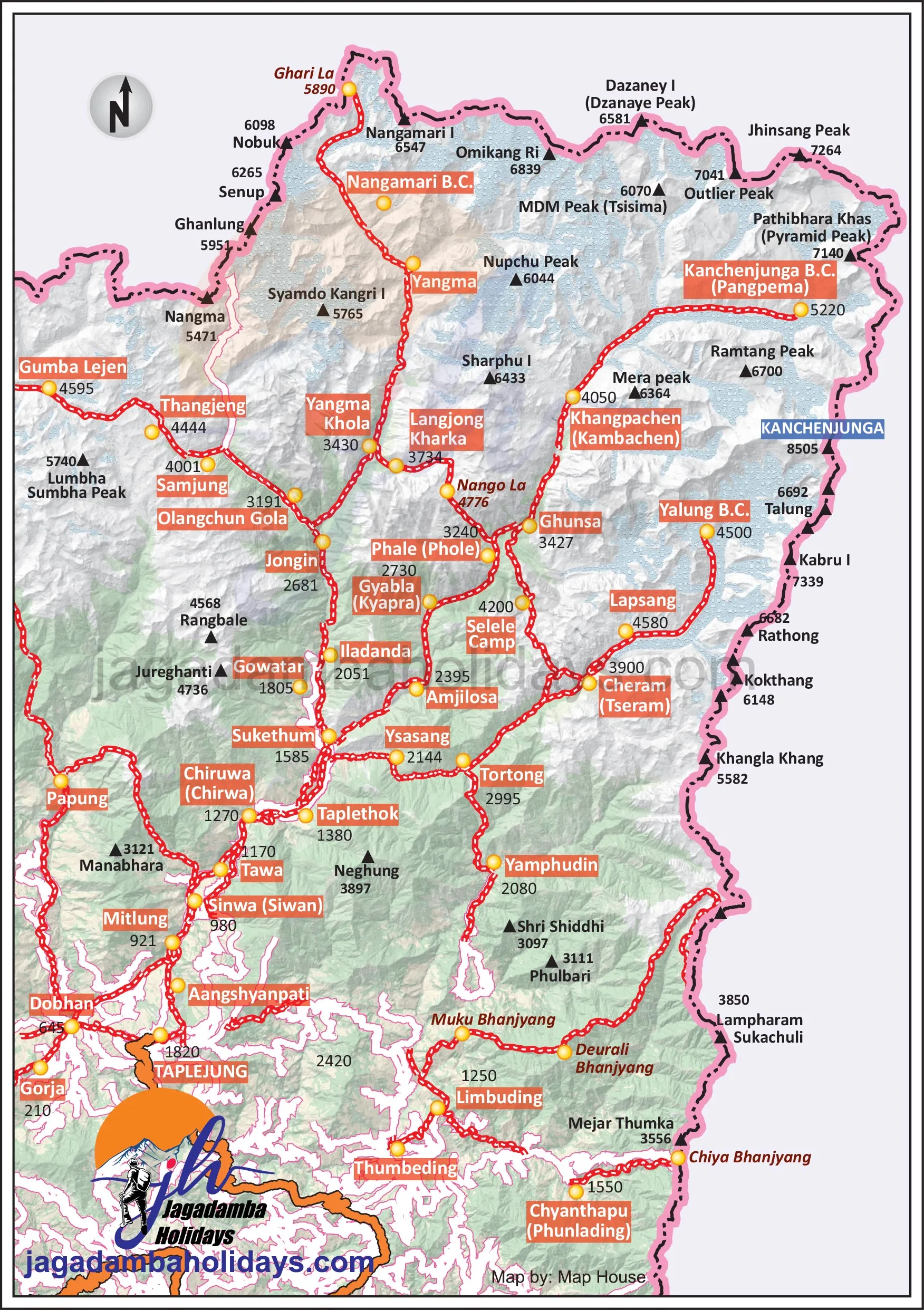
 Route Map
 Freqeuntly Asked Questions
 Reviews And Rating