DHAULAGIRI CIRCUIT TREK IN NEPAL
US$3,600.00
/pp
-
18 Days
-
Dhaulagiri
-
Spring/Autumn
-
Trekking
-
5,370 Meters
-
Hard
-
Car / Plane
-
02-16 People
-
JH#281
 Overviews
The Dhaulagiri Circuit Trek in Nepal is one of the most remote and demanding high-altitude camping expeditions in the Himalayas, encircling Dhaulagiri I (8,167 m), the world’s seventh-highest mountain. It is a true high-altitude journey into one of Nepal’s most remote and untamed mountain regions in western Nepal. Encircling mighty Dhaulagiri I (8,167 m / 26,795 ft), the seventh-highest mountain on Earth, this demanding expedition-style circuit is created for experienced trekkers seeking solitude, challenge, glacier crossings, and raw Himalayan wilderness. Away from the busier Everest and Annapurna trails, the Dhaulagiri Circuit ventures deep into remote western Nepal, where dramatic glaciers, soaring ice walls, alpine basins, and technical high mountain passes define the landscape. Along the way, Himalayan explorers move through isolated alpine valleys, follow vast glacier systems, and cross demanding high-altitude passes above 5,000 meters (16,404 ft), rewarded with breathtaking panoramic views across the Himalayan range. Unlike lodge-based trekking routes, the Dhaulagiri Circuit Trek in Nepal operates as a fully supported camping expedition with no permanent teahouses in the upper sections. Trekkers move through remote alpine valleys and glacial terrain toward Dhaulagiri Base Camp (4,740 m / 15,551 ft), before crossing the spectacular French Pass (5,360 m / 17,585 ft) and Dhampus Pass (5,250 m / 17,224 ft). These major Himalayan passes connect isolated valleys rarely touched by mass tourism. Compared to popular routes such as the Annapurna Circuit Trek and the Everest Base Camp Trek, which offer developed lodge infrastructure and consistent trekking traffic, the Dhaulagiri Circuit remains one of Nepal’s least commercialized and most demanding high-altitude expedition routes. Its remote setting, continuous camping logistics, and glacier-dominated landscape preserve a raw, isolated, expedition-style atmosphere rarely found elsewhere in the Himalayas. Proper acclimatization, experienced high-altitude guides, and strong physical preparation are essential for this camping-based Himalayan expedition. Designed for seasoned trekkers, the journey offers isolation, technical terrain, glacier proximity, dramatic icefall scenery, and uninterrupted mountain panoramas. In return, it provides the rare opportunity to complete a true expedition-style Dhaulagiri Circuit in one of Nepal’s most formidable and least explored mountain regions. Expedition Overview and Technical SummaryThe Dhaulagiri Circuit Trek in Nepal is a 17–21 day high-altitude expedition encircling Dhaulagiri I (8,167 m / 26,795 ft). The route reaches a maximum elevation of 5,360 m / 17,585 ft at French Pass and crosses a second major pass at 5,250 m / 17,224 ft at Dhampus Pass. The trek is operated as a full camping expedition in Nepal beyond the lower villages and requires structured acclimatization planning. Due to extended exposure above 4,500 m (14,764 ft), it is classified as challenging to strenuous. - Region: Western Nepal Himalayas
- Accommodation: Expedition camping
- Highest Camp: Dhaulagiri Base Camp (4,750 m / 15,583 ft.)
Route Structure and Terrain ProgressionThe Dhaulagiri Circuit Trek unfolds in three geographical phases. - Lower Approach
The initial section passes through cultivated valleys and traditional Magar settlements before entering alpine terrain. - Glacier and Base Camp Sector
Beyond Italian Base Camp (3,660 m / 12,008 ft), the trail transitions into moraine fields and glacier basins leading to Dhaulagiri Base Camp. - High Pass Traverse
The route crosses French Pass (5,360 m / 17,585 ft) and Dhampus Pass (5,250 m / 17,224 ft) before descending toward the Kali Gandaki Valley. Upper sections may involve snow travel and moraine navigation.
Mountain Landscape and Peak VisibilityThe Dhaulagiri Circuit in Nepal provides sustained mountain exposure, including: - Dhaulagiri I (8,167 m / 26,795 ft.)
- Tukuche Peak (6,920 m / 22,703 ft.)
- Nilgiri Himal (7,061 m / 23,166 ft.)
- Gurja Himal (7,193 m / 23,599 ft.)
- Dhampus Peak (6,012 m / 19,724 ft.)
From French Pass, trekkers stand within a vast glacial basin surrounded by snow ridgelines. Distinctive Features of the Dhaulagiri CircuitUnlike lodge-based trekking routes, the upper section of the Dhaulagiri Circuit Trek in Nepal has no permanent infrastructure. Key characteristics include: - Continuous high-altitude camping
- Extended glacier proximity
- Low seasonal trekking traffic
- Remote alpine basins
This preserves the expedition atmosphere and wilderness integrity of the region. Technical Difficulty and Physical DemandsThe Dhaulagiri Circuit Trek is suitable for experienced high-altitude trekkers. Participants should be capable of: - Sustaining 6–8 hours of trekking per day
- Managing steep ascents and descents
- Navigating snow and moraine terrain
- Operating safely above 5,000 m
Previous trekking experience above 4,500 m / 14,764 ft is strongly recommended. Optimal Season and Weather ConditionsThe best time for the Dhaulagiri Circuit Trek in Nepal is: - Spring (March–May) – Stable weather and moderate snow coverage.
- Autumn (September–November) – Clear skies and consistent mountain visibility.
Winter and monsoon seasons increase avalanche and trail instability risks. Required Permits and RegulationsThe Dhaulagiri Circuit Trek requires: - Annapurna Conservation Area Permit (ACAP)
- TIMS Card
- All permits are arranged in accordance with Nepalese trekking regulations.
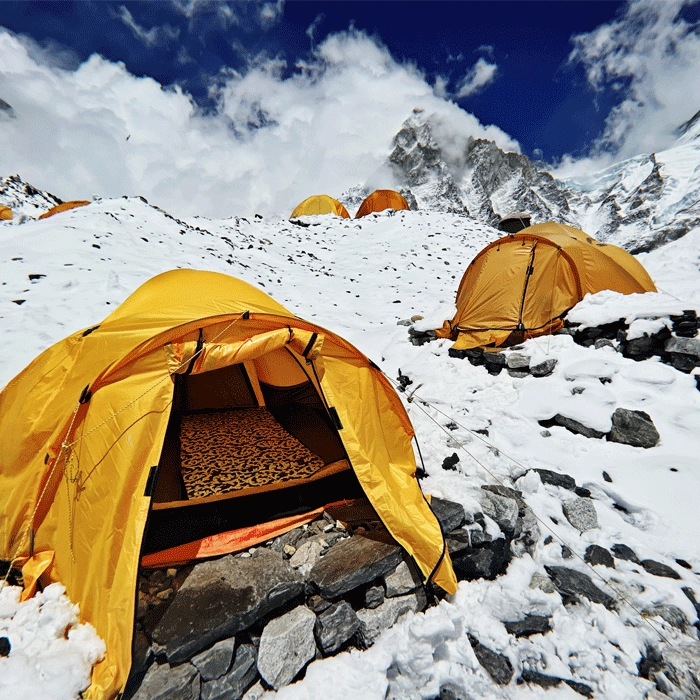
Expedition Logistics and Camp InfrastructureThe Dhaulagiri Camping Trek operates as a fully supported expedition. Support includes: - Licensed high-altitude trekking guide
- Professional support crew
- Expedition-grade tents
- Structured acclimatization schedule
- Emergency coordination
Because of the remote terrain, logistical preparation is essential. Pricing Structure and Operational InclusionsThe Dhaulagiri Circuit Trek cost reflects the complexity of operating in remote high-altitude terrain. Pricing typically includes: - Professional guiding staff
- Porter support
- Camping logistics
- Permits and conservation fees
- All meals during the trek
- Ground transportation
Suitability and Participant ProfileThe Dhaulagiri Circuit Trek in Nepal is appropriate for: - Experienced Himalayan trekkers
- Remote expedition seekers
- High-altitude enthusiasts
It is not recommended for first-time trekkers.
Itinerary (Plan)
Arrive in Kathmandu, Nepal's vibrant capital, where you'll be warmly welcomed with marigold garlands. After transferring to your hotel, take time to relax and acclimate to the bustling city. Discover vibrant local markets, indulge in traditional Nepali dishes, and delve into Kathmandu's rich cultural tapestry. This initial day is perfect for easing into your journey, setting the stage for the exciting adventures ahead in Eastern Nepal. A representative from Jagadamba Holidays will ensure a smooth and pleasant arrival.
Optional Evening Activity:
If you wish, you can spend your evening experiencing the Pashupatinath Aarti, a captivating religious ceremony held at the Pashupatinath Temple. The Aarti usually begins around 6:00 PM and lasts for approximately an hour. This ceremony is a mesmerizing display of traditional music and rituals, providing a profound insight into Hindu spiritual practices. Please check the exact time for the Aarti on the day of your visit, as it may vary. This option is not included in the standard itinerary but offers a unique opportunity to immerse yourself in local culture.
Your day begins with sunrise and an early breakfast before starting a scenic overland journey from Kathmandu to Pokhara in a private minibus. The drive takes approximately 7–9 hours in total and covers about 220 km, passing through changing landscapes of river valleys, terraced hillsides, and traditional settlements along the Prithvi Highway. About two-thirds of the way, you will stop at the charming hilltop town of Bandipur (1,030 m), located approximately 143 km from Kathmandu. This beautifully preserved, car-free Newari mountain village is one of the most atmospheric heritage towns in Nepal. You will have around 1–2 hours to stroll through its peaceful cobbled streets, admire the 200-year-old historic buildings with carved wooden balconies and flower-filled windows, and explore the small temples scattered throughout the town. Bandipur is also an ideal place to pause for a leisurely lunch while soaking in the peaceful mountain atmosphere and panoramic hill views. After your visit, you continue the final section of the journey toward Pokhara, driving approximately 77 km through scenic hills and valleys. Upon arrival in Pokhara, the evening is free to enjoy at your leisure—perhaps with a peaceful walk along the lakeshore of Phewa Lake, where the reflection of the Annapurna range often glows beautifully at sunset.
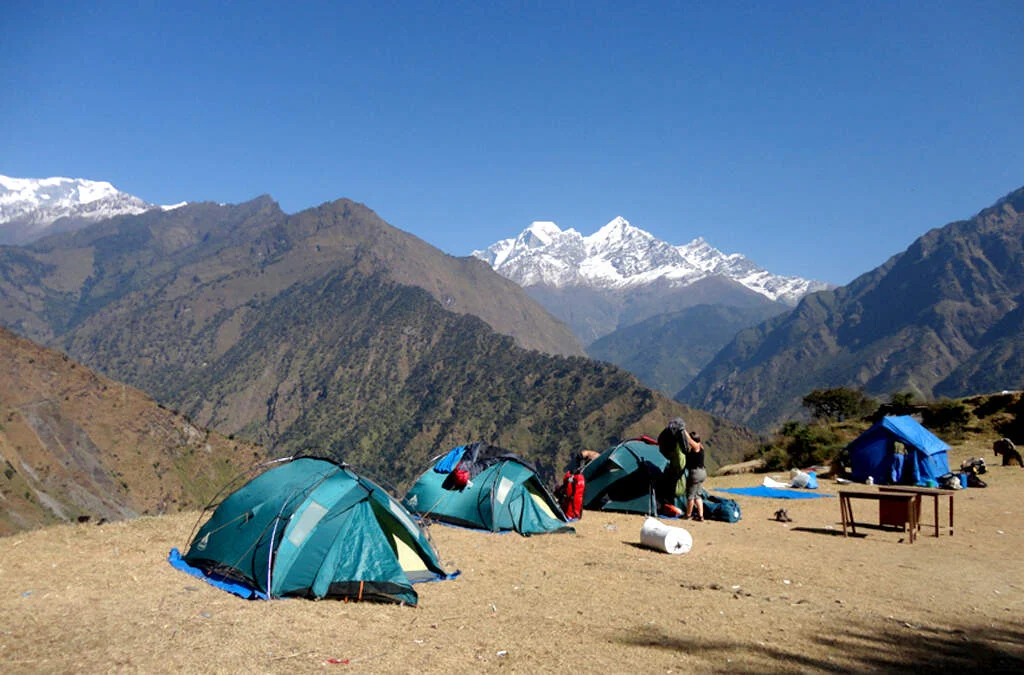
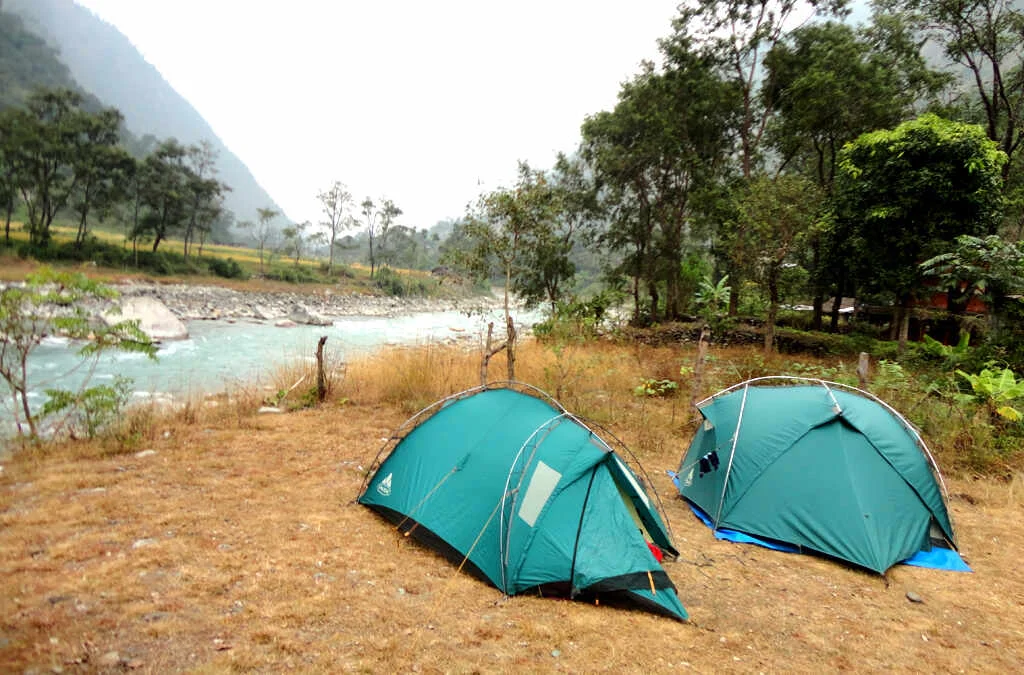
In the morning, you'll leave Pokhara (822 m / 2,697 ft) in private jeeps and finally head into the mountains. Your first stop is in Beni (899 m / 2,949 ft) on the Kali Gandaki River. Before the road was built, this was the traditional starting point for the trek. Just outside the village, you'll have your first breathtaking view of the imposing south face of Dhaulagiri (8,167 m / 26,795 ft) – the seventh highest mountain in the world. This will immediately build anticipation for the adventure ahead. The distance between Pokhara via Baglung to Sibang (1,780 m / 5,840 ft) is approximately 101 km, and the journey usually takes 7–8 hours due to the narrow and rugged mountain roads. From here, the road follows a wide valley along the Myagdi Khola River, surrounded by the green subtropical foothills of the Himalayas. This gravel mountain road now extends all the way to Muri (1,850 m / 6,070 ft), but to allow better acclimatization, today's journey continues only as far as Sibang (1,780 m / 5,840 ft). The final section from Darbang (1,110 m / 3,642 ft) to Sibang is particularly scenic. In clear weather, you will enjoy impressive views of several peaks of the Dhaulagiri Himal range, including Gurja Himal (7,193 m / 23,599 ft), Konabon (6,570 m / 21,555 ft), Tsaurabong (6,395 m / 20,981 ft), Dhaulagiri V (7,618 m / 24,993 ft), and Dhaulagiri III (7,715 m / 25,312 ft). Upon arrival in Sibang (1,780 m / 5,840 ft), you will meet your entire expedition support team of porters, cooks, and helpers. Since there are no permanent guesthouses or teahouses along most sections of the Dhaulagiri Circuit Trek, the journey is conducted as a fully supported camping expedition. Your tents will be prepared by the crew, and you will spend the night at the campsite in Sibang.
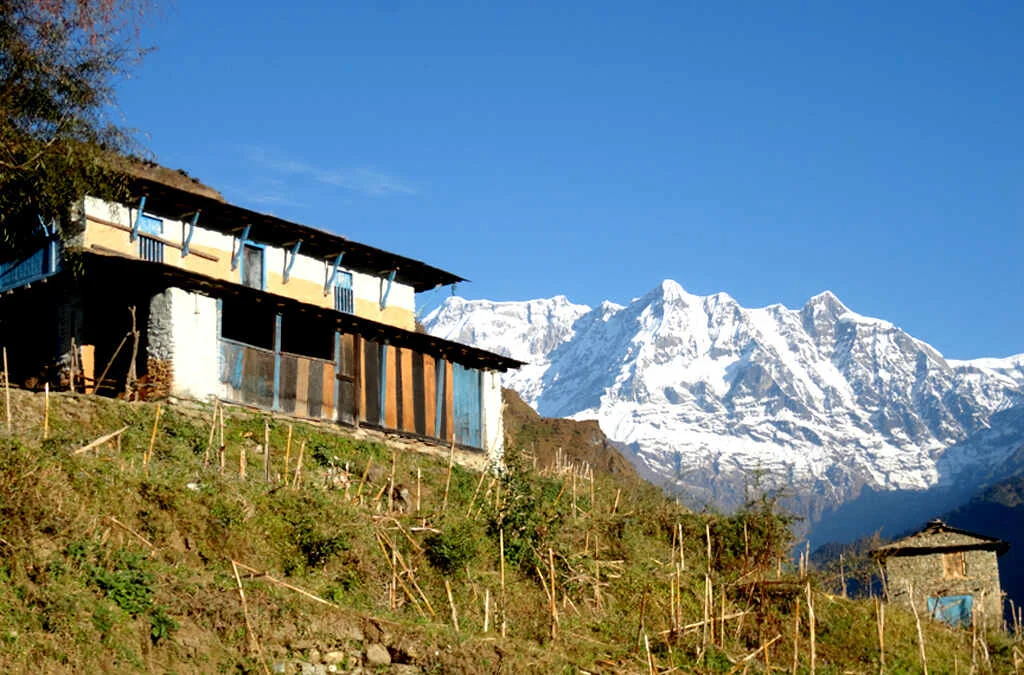
After breakfast in Sibang, the trek begins toward Muri (1,860 m / 6,102 ft), a charming Magar village nestled in the foothills of the Himalayas. The trail leads through lush hillsides and traditional settlements, gradually bringing you closer to the high mountains. Upon arrival in Muri, you are rewarded with closer and more impressive views of the surrounding peaks, making it a memorable stop along the route. The trek from Sibang to Muri covers approximately 7 km and takes around 3 to 4 hours to complete. During the journey, you will ascend about 770 meters (2,526 ft) and descend approximately 660 meters (2,165 ft), following a mix of downhill and uphill sections across varied terrain. Today’s trail offers a rich cultural and natural experience as you pass through small villages inhabited by Gurung and Thakali communities, where traditional lifestyles remain beautifully preserved. The route descends into a side valley of the Dar Khola River before climbing steadily toward Muri, providing scenic views of terraced fields, forests, and rural Himalayan life. Dhaulagiri Circuit Trek in Nepal and Dhaulagiri Base Camp Trek in Nepal offer the ultimate adventure into the high Himalayas. Muri (1,860 m / 6,102 ft) is the last major settlement before the trail climbs further into Nepal’s remote regions. The village is known for its year-round habitation and stunning mountain panoramas, now even closer than earlier viewpoints. Overnight accommodation in comfortable tented camps allows you to enjoy the serene atmosphere of this authentic Himalayan village. Stay in well-equipped, comfortable tented camps while exploring remote Himalayan landscapes. Jagadamba Holidays provides expert trekking guides and camp chefs, serving fresh breakfast, lunch, and dinner at each campsite, ensuring rugged mountains and unforgettable trekking experiences.
After breakfast in Muri, the trek begins toward Boghara (2,010 m / 6,594 ft), a small settlement tucked along the Myagdi Khola River. The trail first descends approximately 350 meters through terraced fields before following the river valley. You will skirt a mountain spur to the east, walking along the western side of the valley and passing several traditional villages, gradually immersing yourself in the local Himalayan landscape. Upon arrival in Boghara, you are rewarded with views of the summit of Jirbang (6,062 m) and the gorge-like Myagdi Khola valley. The trek from Muri to Boghara covers approximately 10 km and takes around 6–7 hours to complete. During the journey, you will ascend about 1,380 meters (4,528 ft) and descend approximately 1,150 meters (3,773 ft), navigating sections of steep mountainside trails that require sure footing and a head for heights. Today’s route highlights a combination of riverside trekking, subtropical landscapes, terraced fields, and traditional villages of the Myagdi Khola valley. You remain mostly below 3,000 meters, offering a mix of lush forest and cultivated land, with occasional glimpses of the high Himalayan peaks surrounding the valley. Boghara (2,010 m / 6,594 ft) is a quiet, year-round settlement, providing a peaceful base for overnight stays. Overnight accommodation is provided in comfortable tented camps, allowing you to rest and enjoy the serene mountain valley atmosphere.
After breakfast in Boghara (2,010 m / 6,594 ft), the trek continues toward Doban Kharka (2,480 m / 8,136 ft), a small clearing nestled in high alpine pastureland. The trail passes through dense mountain forest, with natural stone steps and occasionally thick vegetation that may slow your progress. You will pass the tiny villages of Lipche and Lapche Kharka, experiencing traditional mountain life and pastoral landscapes along the way. Whenever there is a break in the trees, you can enjoy magnificent views of the west face of Dhaulagiri and the surrounding Himalayan peaks. The trek from Boghara to Doban Kharka covers approximately 9 km and takes around 5–6 hours to complete. During the journey, you will ascend about 1,150 meters (3,773 ft) and descend approximately 610 meters (2,001 ft), navigating trails that may be slippery after rain and require sure footing. Today’s route highlights dense forest trekking, alpine pastures, traditional villages, and scenic Himalayan vistas. Along the way, you may spot goats, cows, and occasionally the first yaks of your journey. Doban Kharka remains a seasonal pasture area, offering a serene environment and panoramic views of Myagdi Matha (6,273 m) to the northwest. Doban Kharka (2,480 m / 8,136 ft) is a peaceful campsite in the high alpine valley. Overnight accommodation is provided in comfortable tented camps, allowing you to rest while enjoying the tranquil mountain setting.
After breakfast in Doban Kharka (2,480 m / 8,136 ft), the trek continues toward Sallaghari (3,130 m / 10,269 ft), a high-alpine campsite nestled amidst dramatic Himalayan landscapes. Today’s trail climbs more steeply over a shorter distance, taking you through dense rhododendron and coniferous forests that gradually thin out as you gain altitude. The path may be overgrown in sections, and occasional detours are necessary around landslides. You will also cross two basic bridges, each 10–15 meters long, which are often repaired after floods. The trek from Doban Kharka to Sallaghari covers approximately 6 km and takes around 5 hours to complete. During the journey, you will ascend about 990 meters (3,248 ft) and descend approximately 330 meters (1,083 ft), navigating steep forested trails and high-alpine terrain. Today’s route highlights steep Himalayan trails, rhododendron forests, alpine scenery, and high-altitude trekking experiences. The landscape gradually opens to panoramic mountain views as you approach Sallaghari, giving you a taste of the higher Himalayan region. Sallaghari (3,130 m / 10,269 ft) is a peaceful campsite in a high-alpine setting. Overnight accommodation is provided in comfortable tented camps, allowing you to rest and enjoy the serene mountain environment.
After breakfast in Sallaghari (3,130 m / 10,269 ft), the trek continues toward the Italian Base Camp (3,630 m / 11,909 ft). Today’s stage is intentionally short to allow for optimal acclimatization. The trail climbs more steeply above the tree line into open, rugged high-alpine terrain. Along the way, the imposing west face of Dhaulagiri suddenly dominates the skyline, leaving trekkers in awe of its immense scale. The summit, towering approximately 4,500 meters above, appears both majestic and almost unreachable. The trek from Sallaghari to Italian Base Camp covers approximately 4 km and takes around 3 hours to complete. During the journey, you will ascend about 560 meters (1,837 ft) and descend approximately 60 meters (197 ft), navigating steep alpine terrain and open ridges. Today’s route highlights high-alpine trekking, dramatic mountain views, and the awe-inspiring west face of Dhaulagiri. The open terrain provides unobstructed panoramas, making this short stage a memorable and rewarding experience. Italian Base Camp (3,630 m / 11,909 ft) is a remote high-alpine campsite where tents will be set up for a two-night stay, giving you time to rest and acclimatize before continuing the trek.
Today is an acclimatization and rest day at the Italian Base Camp (3,630 m / 11,909 ft), providing the perfect opportunity to recharge after the previous trekking stages. Spending time at this altitude allows your body to adjust properly before continuing higher, reducing the risk of altitude sickness. For those with energy and enthusiasm, the guide may lead a short hike toward the west face of Dhaulagiri, climbing to nearly 4,000 meters. From this vantage point, you can enjoy breathtaking views of surrounding peaks, including Konabon, Myagdi Matha, Tsaurabong, Dhaulagiri V, and Dhaulagiri II, which appear almost within reach. This day highlights high-alpine scenery, spectacular mountain panoramas, and essential acclimatization, offering a perfect balance of rest and optional exploration. Overnight accommodation is provided in comfortable tented camps at Italian Base Camp, allowing you to relax and fully enjoy the serene and majestic surroundings.
After breakfast at Italian Base Camp (3,630 m / 11,909 ft), the trek continues toward Glacier Camp (approx. 4,150 m / 13,615 ft), also known as Japanese Base Camp. Well acclimatized, today you venture deeper into a world of ice, snow, and towering rock faces. The trail crosses an ice crater and sloping moraine terrain formed by avalanches from the west face of Dhaulagiri. Along the way, look back for spectacular views of Mount Manapathi and its subsidiary peaks, and pass through the narrow corridor framed by Dhaulagiri I, II, and III. The trail ascends along the upper reaches of the Myagdi Khola, where the river emerges from the icy expanse of the Chhonbardan Glacier. The trek covers approximately 6 km and takes around 5–6 hours. During the journey, you will ascend about 790 meters (2,592 ft) and descend approximately 200 meters (656 ft), navigating challenging high-alpine and glacial terrain. Today’s highlights include high-alpine glacier trails, steep moraine paths, vertical mountain walls, and breathtaking glacier scenery, offering an unforgettable glacier trekking experience. Glacier Camp / Japanese Base Camp (approx. 4,150 m / 13,615 ft) is a remote high-alpine campsite. Overnight accommodation is provided in comfortable tented camps, allowing you to rest while enjoying the dramatic ice and mountain environment.
After breakfast at Glacier Camp (approx. 4,150 m / 13,615 ft), the trek continues along the Chhonbardan Glacier toward Dhaulagiri Base Camp (4,650 m / 15,255 ft). The trail crosses scree-covered glacier terrain, with occasional patches of bare ice or fresh snow, and requires careful navigation around visible crevasses. Along the way, you are rewarded with stunning views of Sita Chuchura (6,611 m) and Tukuche Peak (6,920 m), while the north face of Dhaulagiri gradually dominates the skyline. The trek from Glacier Camp to Dhaulagiri Base Camp covers approximately 5 km and takes around 4–5 hours. During the journey, you will ascend about 560 meters (1,837 ft) and descend approximately 70 meters (230 ft), navigating high-alpine glacier terrain and rocky moraine. Today’s route highlights glacial trekking, high-alpine scenery, and breathtaking views of Dhaulagiri’s north face, giving trekkers an unforgettable close-up of one of the world’s highest mountains. Dhaulagiri Base Camp (4,650 m / 15,255 ft) is a remote high-alpine campsite. Overnight accommodation is provided in comfortable tented camps, allowing you to rest while enjoying the awe-inspiring ice, rock, and glacier environment.
After breakfast at Dhaulagiri Base Camp (4,650 m / 15,255 ft), the trek continues toward the French Col (5,360 m / 17,578 ft) and then descends into the Hidden Valley (5,040 m / 16,536 ft). The trail begins by ascending the lateral moraine of a glacier flowing from Tukuche Peak, gaining approximately 300 meters in altitude. You then turn left through a high hollow, gradually reaching the French Col, the lowest point of the ridge between Sita Chuchura and Tukuche Peak, where colorful prayer flags mark your first ascent above 5,000 meters. From the col, the views are breathtaking, with Dhaulagiri I dominating the landscape behind you. After enjoying photos and soaking in the scenery, you descend into the high-alpine Hidden Valley, where camp is established at 5,040 m / 16,536 ft. The summit of Dhampus Peak is already visible, giving a preview of tomorrow’s highlight. The trek covers approximately 9 km and takes around 7 hours. During the journey, you will ascend about 830 meters (2,723 ft) and descend approximately 370 meters (1,214 ft), navigating challenging high-alpine terrain. Today’s highlights include high-alpine moraine trails, panoramic mountain vistas, the French Col pass, and stunning Hidden Valley scenery, offering an unforgettable alpine experience. Hidden Valley Camp is a remote high-alpine campsite. Overnight accommodation is provided in tented camps, allowing you to rest while enjoying the dramatic mountain environment.
After breakfast at Hidden Valley Camp (5,040 m / 16,536 ft), the trek begins across the Dhampus Pass (5,244 m / 17,200 ft), one of the key high-alpine challenges on your journey. The ascent to the pass is steep but rewarding, with breathtaking views of the Annapurna and Dhaulagiri ranges. Upon reaching the pass, you start a gradual descent toward Yak Kharka (approx. 3,900 m / 12,795 ft), a high-altitude pasture campsite. Along the way, the landscape transitions from barren rocky terrain near the pass to lush alpine meadows, offering a chance to take in Nepal’s dramatic high-mountain scenery. The trek covers approximately 12.5 km and takes around 8–10 hours. During the journey, you will ascend about 400 meters (1,312 ft) and descend approximately 2,000 meters (6,562 ft), navigating a mix of steep moraine trails, rocky sections, and high-alpine terrain. Today’s highlights include high-alpine passes, panoramic mountain vistas, dramatic ridges, and expansive alpine meadows, providing an exhilarating and memorable trekking experience. Yak Kharka (approx. 3,900 m / 12,795 ft) is a high-altitude campsite set among scenic alpine pastures. Overnight accommodation is provided in tented camps, allowing you to rest and enjoy the serene mountain environment after a long and rewarding day.
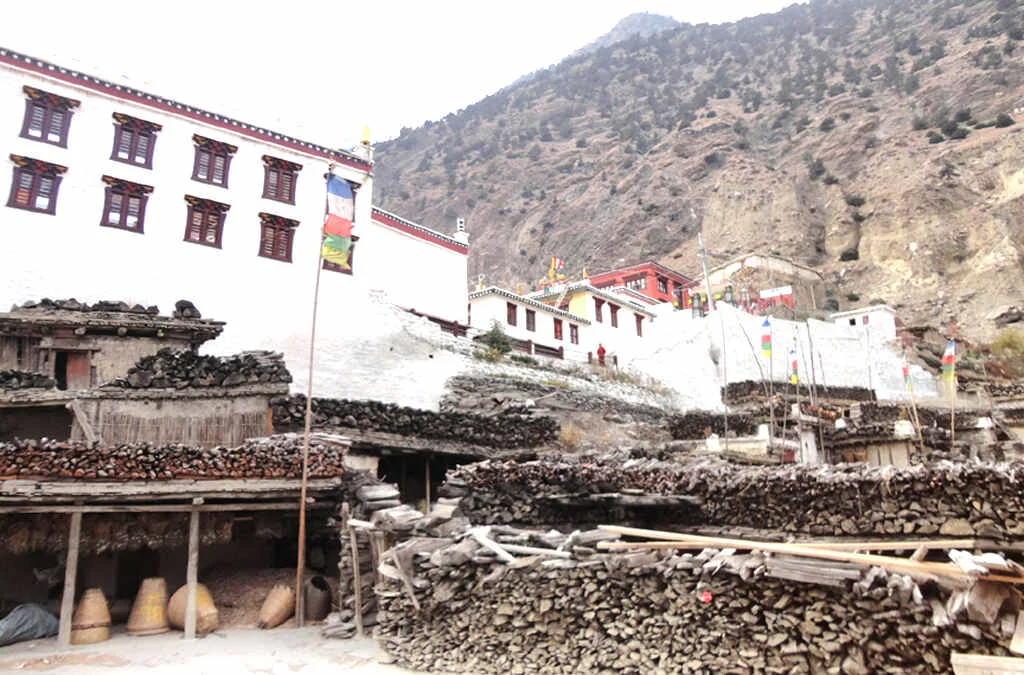
After breakfast at Yak Kharka (approx. 3,900 m / 12,795 ft), the trek begins the final descent toward Marpha (2,650 m / 8,694 ft) in the Kali Gandaki Valley. Today’s route is mostly downhill, and as you leave the high-alpine zone, vegetation gradually returns. The barren rocky terrain gives way to lush forests and fruit orchards, marking your reentry into civilization. The trek covers approximately 3 km and takes around 3 hours. During the descent, you will lose about 1,250 meters (4,101 ft), following gentle downhill trails that allow you to relax and enjoy the scenic transformation of the landscape. Today’s highlights include panoramic valley vistas, alpine meadows, fruit orchards, and the charming village of Marpha, offering a rewarding conclusion to your high-mountain journey. Marpha (2,650 m / 8,694 ft) is renowned for its apples and apple brandy. Overnight accommodation is provided in a comfortable lodge, where you can rest, explore the village at leisure, and celebrate the successful completion of your trek with your support team.
Today is a free day in Pokhara, allowing you to enjoy the city and surrounding landscapes at your own pace. You can choose from a variety of experiences depending on your interests: Sightseeing & Culture: Take a hike to the World Peace Pagoda for panoramic views over Pokhara and Phewa Lake, or wander through the local markets and streets to discover traditional crafts and local life. Adventure & Outdoor Activities: Ride the cable car up to Sarangkot for spectacular sunrise or sunset views, watch paragliders floating above the valley, try paragliding yourself, or explore the trails on a mountain bike tour. Relaxation & Lake Experiences: Enjoy a rowboat ride on Phewa Lake, unwind at a lakeside café, or simply soak in the tranquil scenery after your high-mountain trek. Today’s highlights include breathtaking viewpoints, cultural immersion, adventure activities, and lakeside leisure, offering a perfect balance of excitement and relaxation. Overnight accommodation is provided at Hotel Middle Path & Spa or a similar standard hotel, where you can rest comfortably and prepare for your onward journey.
After enjoying breakfast at your hotel, you will set out for your journey from Pokhara to Kathmandu. Tourist buses usually leave in the early morning, around 7:30 AM. You can choose to travel by road or take a short scenic flight. The drive to Kathmandu takes about 6 to 7 hours and follows the beautiful Prithvi Highway, where you’ll pass alongside rivers, terraced fields, and small hillside villages that offer a glimpse of everyday life in Nepal. If you prefer a quicker option, you may take a domestic flight of about 25 to 30 minutes. On clear days, the flight provides stunning views of the Himalayan peaks. This option is available at an additional cost of USD 135 per person (one way), including airport transfers. Once you arrive in Kathmandu, you will be transferred to your hotel. The rest of the day is yours to spend at your own pace—whether you choose to relax at the hotel or explore nearby areas. You will spend the night in a comfortable deluxe twin-sharing room at Kathmandu Guest House or a similar category hotel. Breakfast and dinner are included.
Concluding Your Journey in Nepal As your Dhaulagiri Circuit Trek in Nepal draws to a close, this final day offers a meaningful opportunity to reflect on the remarkable journey you have completed across the Himalayas of Nepal. From the remote mountain wilderness around the Dhaulagiri region to the diverse landscapes leading back to the vibrant city of Kathmandu, this journey has revealed the true beauty and cultural richness of Nepal. Throughout the trek, encounters with local communities, visits to traditional villages, and travel through dramatic Himalayan terrain have created experiences far beyond conventional sightseeing. The transition from high-altitude alpine landscapes to lower hills and bustling city life reflects the extraordinary geographical and cultural diversity that Nepal offers within a single journey. Carefully designed to balance adventure, cultural insight, and natural beauty, this trek leaves lasting memories of both the outer grandeur and inner spirit of the Himalayas. Airport Transfer and Farewell For a smooth and well-organised departure, a representative from Jagadamba Holidays will collect you from your hotel approximately 3.5 hours prior to your scheduled international flight. A private transfer will then take you to Tribhuvan International Airport, ensuring a comfortable and timely conclusion to your stay in Nepal. As a final gesture of goodwill, you will be presented with a traditional khata scarf — symbolising respect, gratitude, and positive blessings — along with warm wishes for a safe and pleasant onward journey. We sincerely thank you for travelling with Jagadamba Holidays and look forward to welcoming you again for future Himalayan adventures.
Group Size & Pricing
| Group Size (Pax) |
2 - 2 |
3 - 4 |
5 - 6 |
7 - 8 |
9 - 12 |
13 - 16 |
17 - 20 |
21 - 24 |
25 - 32 |
| Cost Per Person |
$3,240 |
$3,200 |
$3,160 |
$3,120 |
$3,080 |
$3,040 |
$3,000 |
$2,960 |
$2,920 |
Cost Include
- All transfers within Nepal are included as per itinerary
- Any domestic flight of Nepal as per trekking itinerary
- Trekking accommodation (hotel, lodge and/or tent) as per itinerary
- Small shared room with shared bathroom during trek in Nepal
- In Kathmandu and/or Pokhara: Stay at ***Hotel with breakfast
- Luggage for porters during the trek (12.5 kg/person)
- 3 meals (Breakfast, Lunch and Dinner) during the trek
- Unlimited tea or coffee for breakfast during the trek
- An English speaking guide (trekking/tour) as per Itinerary
- Travel insurance for trekking staff (guides and porters)
- All expenses of trekking staff(s) during trekking
- Includes all conservation, national park, trekking, and climbing permits
- Sightseeing / Wildlife tours if included in the itinerary
- Farewell dinner in Kathmandu before returning home
Cost Exclude
- Single room/single tent surcharge (on request)
- Round trip/one way international flight ticket to Nepal.
- Tourist visa for Nepal (30-50 $, depending on length of stay)
- Personal Insurance (covers: Trip/flight cancellation, helicopter rescue)
- Meals (lunch, dinner) at hotels in Kathmandu, Pokhara and other cities
- Drinks (soft, hot or mineral/boiled water) during the lodge trek
- Any personal trekking and/climbing equipment for trekking in Nepal
- Hotel expenses in case of early return from trekking for any reason
- Costs due to flight cancellations & extra porters/horses during the trek
- Additional costs incurred due to any reason beyond Jagdamba’s control
- More evidence about pandemics like COVID-19 if needed in the future.
- Personal expenses during the trek (phone, wifi, shower, charging etc.)
- Other costs and things that are not mentioned in the service inclusion
- Gratuity for trekking staff (recommended: 9€ /10$ per traveler per day)
|



 Trip Overview
 Travel Itinerary
 Cost Includes
 Cost Excludes
 Fixed Departure
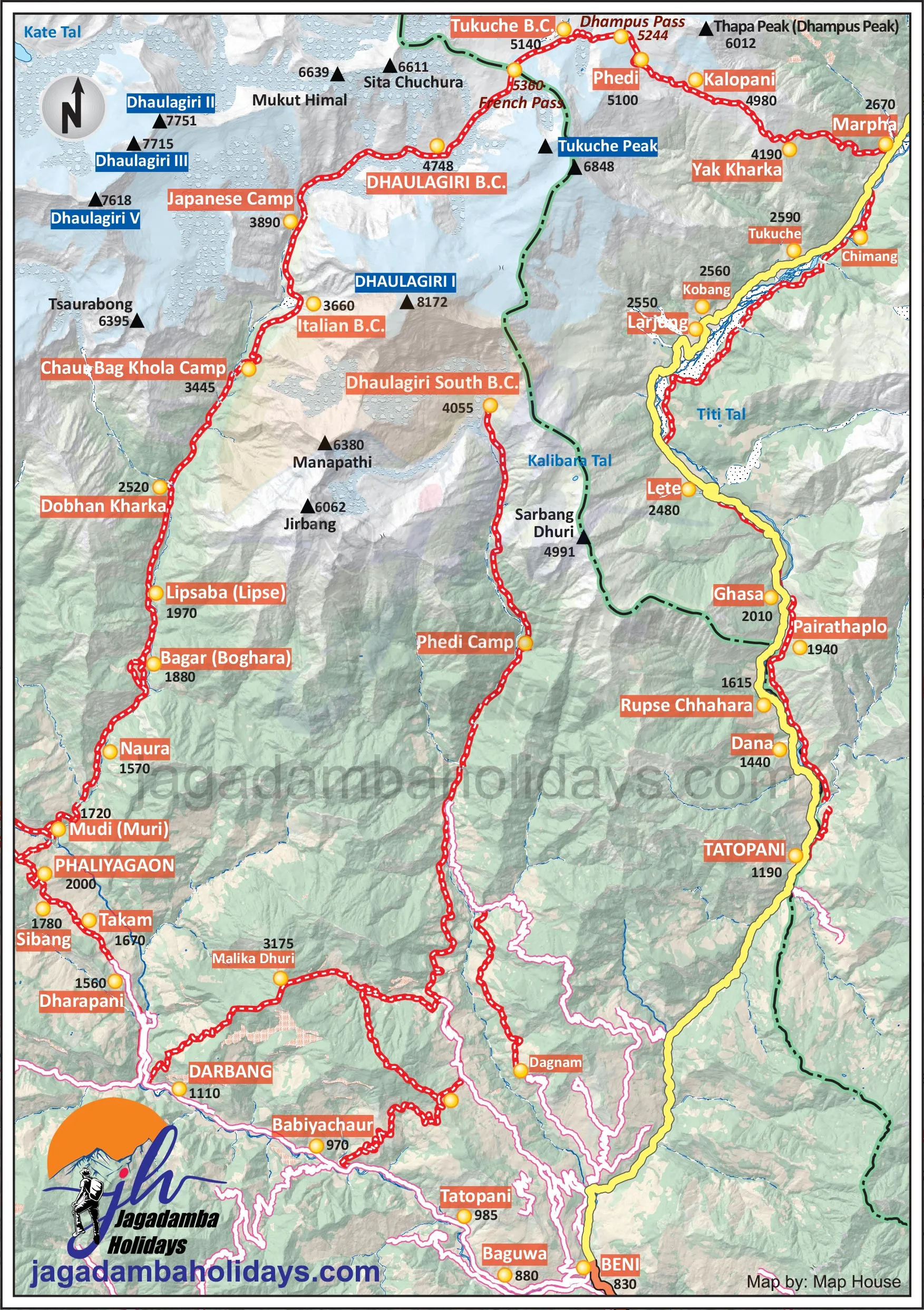
 Route Map
 Frequently Asked Questions
 Reviews And Rating









Michael Anderson
The Dhaulagiri Circuit with Jagadamba Holidays was the toughest but most rewarding trek I’ve ever done. Crossing the French Pass and Dhampus Pass was physically demanding, but the team’s support made it possible. The landscapes were surreal—snowfields, glaciers, and massive mountain walls everywhere you looked. The logistics were flawless, and the guides handled altitude concerns with care. I felt safe, challenged, and amazed every single day.
Rachel Kim
The Dhaulagiri Circuit trek tested my limits but rewarded me with memories I’ll cherish forever. Towering ice walls, frozen rivers, and the sight of Dhaulagiri I in its full glory were breathtaking. Our guide was not just knowledgeable but also deeply caring—checking oxygen levels daily and motivating us when it got tough. Jagadamba Holidays delivered an expedition-style trek with a personal touch.
Luca Bianchi
This is the most challenging trek I’ve ever done, but Jagadamba Holidays made it feel achievable. The campsites were well managed, food was warm and energizing, and the guides knew exactly how to pace the group. Even during snowstorms, the team kept spirits high with their humor and professionalism. Truly, an expedition worth every step.